Up Market |

- The 5 Biggest Mistakes Made on LinkedIn
- I’m Done! Now What?
- POP!
- Examine the Message, Empower the People
| The 5 Biggest Mistakes Made on LinkedIn Posted: 04 May 2012 08:00 AM PDT
What other social media blunders have you noticed (or been the victim of)? Let us know in the comments! Photo Credit: mariosundar  |
| Posted: 04 May 2012 05:00 AM PDT
You described my situation perfectly last week, with the hurdles and trying to do waaay too much. I’ve been doing that for a few weeks now. Except… I’m done. I mean, I have other stuff I can do, but the pressing deadlines are past. I feel like I’m wandering around in a haze, and I’m not sure why. Shouldn’t I feel relieved to start working on things that don’t have to be done yesterday? Lost Dear Lost, You just ran a marathon. More than a marathon. You ran an triathlon with big rocks interspersed in the route that required climbing gear to navigate. Of course you’re wandering around in a haze! You’ve given everything you have, physically and mentally, and you need to let your body and mind recover. So wander. Clear your schedule for a week or two. Give yourself permission to do nothing. Sleep. Read a good book. Go get a massage. Head out to a national park and go hiking. Have sex with your partner. Do whatever appeals to you on the spur of the moment. It might take a while, but eventually you’ll think about the projects you set aside and you’ll be eager to dig back into them. When you can think about taking on new ideas and responsibilities and get excited about it, you’ll know that you’re ready to get back in the game. So go. Let yourself wander. Enjoy the moment. Kirsten Got a productivity conundrum? Shoot Kirsten an e-mail and get your answer!  |
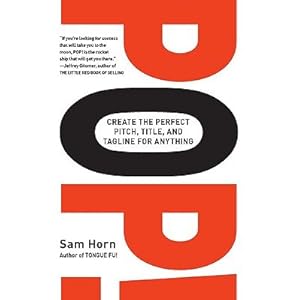
| Posted: 04 May 2012 02:00 AM PDT Book Recommendation: POP!: Create the Perfect Pitch, Title, and Tagline for Anything by Sam Horn
But what is POP!? POP stands for Purposeful, Original, and Pithy. I think we can agree that the best titles incorporate these three ideas. No one wants to use a boring, forgettable title, especially when we have put a great deal of time and money into a project. This book walks you through several exercises that help you create a title that pops! One exercise that helped me clarify what I needed in a title was the W9 form. Yes, this sounds like a horrible human resources form, but in reality it is a great way to focus on your title. The W9 form consists of 9 questions starting with what, why, who, and when that help you understand what your project is really trying to do. Once you know the answers to these nine questions the title will jump out at you and you'll wonder why you didn't see it before. If you still need more help finding the perfect title there are more exercises. Some of them have you look at your project through the eyes of your customer. Others have you act like a salesman or use humor to tease out a great title. By the time you finish this book you will have found the perfect title. Use it well! Photo Credit: Amazon  |
| Examine the Message, Empower the People Posted: 03 May 2012 11:00 AM PDT
Like Angela, I was pushed early on to be successful, too. Back then, it was about art and music and storytelling, but the themes were similar: You can be better, you can try harder, you have a seed of greatness to nurture. But despite the strong thread of personal potential, the other messages surrounding me were mixed. I learned to tear myself down at the same time as I learned to build myself up. I have indulged in both habits in equal measure. It’s a confusing state that I find most people I meet are already familiar with. There’s something I’ve noticed about myself, and about “empowered women” in my life, especially women in business and entrepreneurship. We’ve learned the good habits and the bad ones simultaneously. We’ve internalized those mixed messages in such a way that our underlying worldview makes us small, even while our words and actions seek to make us big. We’ve built ambitious businesses to improve and inspire the world around us, but we still can’t easily believe in our own right to respect and accomplishment. In the end, we pass those mixed messages on to the younger generation… at least, most of the time. We do it without thinking, without realizing how much impact our most subtle of decisions can have. It’s not just what we say. It’s what we do, what we assume, how we construct our projects, how we run our businesses, and how we teach the people we work with to run our businesses, too. The messages aren’t always obvious. Some are loud and clear, but some are very subtle and difficult to pin down, even when we’re looking for them. It doesn’t have to be this way. If we each peer closely into our own heads and root out the mixed messages, we can find them and stop them in their tracks. We can set straight the misaligned pieces. We can send out strong messages — the right messages — and help others to build themselves up without unintentionally undermining them at the same time. The solution for any woman and any man, in business or not, is to seek to be fully conscious and self-aware of those messages so that we can make sure far more good messages are getting through. It’s not easy, but it’s possible. I believe that we have a responsibility as human beings — especially ones running companies and institutions and projects that are so much larger than ourselves — to examine our lives and our practices and our projects, not just at the surface (“We sent $5000 to support a women’s empowerment initiative this year!”) but in our deepest layers of intention, too. What are all the other, subtler messages we send out into the world, not realizing how powerful those subtler messages can be? What does our business say with its words, with the way it treats its clients and employees, and with its design and organization and seemingly unrelated policies? Each one of us has come so far already, and I think we owe this to our communities and to the world around us. It’s easy to stay on the topmost layers of what being in business means, and do what other businesses do to make themselves stand out. But the deeper we dig, the more remarkable — and more human — we and our businesses become. And after all, there’s no need to define ourselves by the competition’s standards. Who cares what everybody else is doing? If Upmarket is about anything, it’s about creating our own standards. It’s the only way we can be most true to ourselves, and do the most possible good while we’re at it. It’s the only way we can make our messages as clear as (humanly) possible. What message are you sending out into the world? Join Angela’s conversation, and leave a comment here to tell us what you think. Image credit: Productive Flourishing  |
 As a career coach, I’ve seen many mistakes made on
 Often coming up with an idea is not difficult; coming up with a great title is the hard part. I once had an idea for a Disney blog, but I had no idea what to call it. I asked friends and family for advice, but nothing was quite right. On a whim I picked up POP! and by the second exercise I had come up with my perfect title. Since then I have used this book to quickly come up with the best titles for many different projects. POP! is proven to work.
| You are subscribed to email updates from Upmarket To stop receiving these emails, you may unsubscribe now. | Email delivery powered by Google |
| Google Inc., 20 West Kinzie, Chicago IL USA 60610 | |

Niciun comentariu:
Trimiteți un comentariu