jesperastrom.com |

- Creating your first Data Driven Marketing strategy?
- Facebook Timeline for Pages
- Black Hat SEO and how to do it
- Think Different – RIP Steve jobs
- Time to move on from Honesty
- Reading level and SEO
- Facebook Timeline and the return of Gifts
- Does SEO hurt Conversion?
- Comparing Facebook Deals and Groupon whilst recognizing Google will win the war
- Cameron vs. Free speach – a true but frightening story
| Creating your first Data Driven Marketing strategy? Posted: 01 Mar 2012 06:03 AM PST
 Data driven marketing isn’t as difficult or boring as you might first think. It is virtually a way of viewing marketing where you admit that the “big idea” kind of marketing we have been used too, no longer is relevant. Cause it isn’t relevant anymore. Seriously. Oh yea, you might get lucky in a campaign or two, but if there is a method through which you can be successful all the time, then why not use that instead?
First off, you have agencies that over promise as they do not know the full set of pre-existing conditions at the client. Secondly you get clients that over expect as they get impressed and forget that they are dealing with human beings, not miracle makers. The alternative, being recommended or winning a client slowly, bit by bit, is a lot better. Not only because you adapt to the client more smoothly, but because you take in as much as you deliver. Winning a client becomes a learning experience. Which is also the essence of data driven marketing. You learn, adapt and improve. No need for disappointments, just deliveries. So, enough of the politics, how do you go about running a data driven marketing campaign? #1. Let’s start with why data driven marketing is importantWell, let’s not start with the how just yet. Let’s begin with the why as it is important to know why you should do something so radical as to base your marketing and communication on facts rather than feelings. a. Improving deliveryMany companies send e-mails to their customers. I would say 80-90% of you do this poorly. The vast majority of e-mails I receive every day have a spam level higher than 3. This doesn’t mean they are spam, but they have such content in them that they will be classed as such by A LOT (approximately 50%) of spam filters. If you use your data sets you would know this. If you would work with data driven marketing you would change and adapt until you would end up at levels closer to 1 which would grant you access to almost everyone on your e-mail list. Ie. today your message doesn’t even reach your end users BY DEFAULT. They don’t have the opportunity to read your communication. This is WHY you need to work with data driven marketing. First look at the data, what it tells you and then adapt accordingly. b. Diversifying profitabilityMany companies work in verticals where profits are decreasing. There are too many similar and comparable products. It doesn’t have to be this way. There is so much data about the users out there and so many tools that simplify communication on a 1-to-1 basis, that you no longer have no excuse. Cause although your product might be generic, the way you bundle it doesn’t have to be. On Facebook for example, there are a 600 million people who have defined themselves through likes, shares and comments on their feeds. If you work with Data driven marketing you can UTILIZE this data in order to diversify your product offering. Eg. if you are offering to sell a mobile subscription you can choose to sell it with the cheapest prize or with the exclusive Flaming banana sword in WoW. Data driven marketing gives you the opportunity to source for WoW players in your customer base and give them the relevant offer of the Flaming banana sword, making your product A LOT different than your competitors product. This is WHY you need to work with data driven marketing so that you can increase the relevance and thus value of your ever more generic products. c. Creating a user journey, not a destinationIn the space of social web, you need to understand that shopping is not a destination. It is an experience and a journey. The definition of a target group is no longer based on demographics but on behavior. In order to grow your business you need people with different characteristics to use your online spaces. You need the activists and ambassadors, you need the haters and you need the audience who watch and simply consume. You need to understand who is who, as you should communicate differently to either one of them. You need to know and not guess. Looking at the data you will find patterns. Not demographical patterns, but behavioral patterns. You will be able to find your different user groups and utilize them the right way. The ambassadors can be utilized to launch new products or communicative messages. The haters can be used to create dynamic discussion and buzz as well as get important feedback on your products or communication. And the consumers, or the audience shall be entertained by either great products or messages that help them consume. This information is all available if you look at your data sets. This is WHY data driven marketing is important to you. Your user should not be treated as any consumer. He or she shall be treated the way they want to and then be led on a journey, with you, to a better and brighter future. Those are three important, but far from the only, reasons as to why you should adopt a data driven marketing strategy. #2. So, how do you go about creating a data driven marketing strategy?As with any strategy, you need to start somewhere. Usually you start with your why, then you have a look at what the rest of the industry is doing and then you make strategic decisions about what you should do, then you set some kind of goals. Then you create an organization that will carry your strategic decisions into practice, you set a budget and you start delivering tactical plans. Creating a data driven strategy is not far from this only that you turn to the available data rather than your gut feeling. Important steps in creating a data driven marketing strategy is to create an organization and find resources that will
It is not the case that data driven marketing takes away the gut from the equation. The gut will always be there to create the hypothesis. Any first launch of a campaign is in fact a hypothesis. The problem with todays marketing is that people create ONE BIG IDEA that shall carry the whole campaign. If that idea doesn’t work, they do not construct their campaigns to adapt, and thus they fail. Data driven marketing allows you to create a concept that is creatively challenging and great, if and only if, you are ready to change everything about it if the data tells you to. If you are not reaching the goals, then that is OK, if and only if you are willing to adapt your tactics, phrasing, main plot or what ever it is your campaign builds upon. #3. How to set your goals for your data driven marketing strategyGoals are goals. They are a guess work and will always be a guess work. We try to make goals into a science by giving them names such as KPIs (Key performance indicators) and assign values to them that are understandable such as “volumes” or “numbers”. I believe this is the wrong way of defining a KPI. A KPI for me should always be a RATE of change. Ie. the derivative of any function. This sounds like math, and it is math. It is not what normal marketing people do, but it is what data driven marketeers do. We need to understand rates of change so that we can understand where our campaign or communications strategy is heading. Think of it this way. If you set your KPI – remember Key Performance INDICATOR – to be a number such as 2 million views on YouTube. Then you launch a campaign. You start off with 250 000 views. All of a sudden you have 500 000 views. Three months later you have 510 000 views. Your campaign is seen as a failure and you have a difficult time explaining in terms of your KPIs what actually went wrong. If you make this same goal a “rate of change” you will much better be able to analyze not only the result, but also the tactic of your campaign whilst it is active. Our video views grew organically by 1% per month before the campaign was launched. We launched the campaign and are currently experiencing a growth rate of 5% every day. In order to reach our expected growth of 800% in a month we need to increase our “rate of change” to at least 35% on a daily basis. (all fictive and non-coherent numbers). As you analyze your numbers you should look at how they are accelerating or decelerating. This is done by deriving the derivative and thus get the speed and direction of how the slope is turning. Ie. you get insights as to whether or not your campaign is building momentum or if it is gradually decreasing in momentum. Remember, you might still show positive results, but the results might be less and less positive every day. A number such as a view count in itself will never be able to answer those kinds of questions. However a rate of change will. That is why it is important to define your KPIs such as rates of change. Eg. We believe that our client report is the most important asset to our users. In 2012 we hence want to increase the download rate of the client report by 35% daily. Booohooo… now you cry… this is boring, difficult and takes a lot of time from being creative. BUT, if you do your job, you will be able to do a lot more creative stuff in the coming steps and be more free to say whether or not your campaign was successful. Plus, don’t worry, there will be tools doing this shortly. Recommended changes as a result of previous performances. So you will only have to work towards those targets in the future and not set them yourself. I know. It is hateful and it is a pain in the ass. But this guess work will be your best friend when it comes to extracting higher budgets for your clients as well. You just need to get them into the boat about this and argue that everything is possible if you are allowed to work towards the goals, run your first attempt as a hypothesis, then adapt your cam #4. Don’t decide what to do, but what to do firstUse your gut to decide what first to say. Ie. from your benchmark studies, from the available data of user behavior that you have on your Facebook activity, your website, your Twitter and in your press room, use your gut to set out a Hypothesis on what to do next. Do NOT build a creative concept that will be the “end game of all games”, but decide on a creative concept that will take you one baby step further down the line. a. Creativity and dataI think I have to discuss creativity in some more detail here in order to make sense. The current creative industry works with big ideas or solutions. In the case of data driven marketing strategies you have to think in terms of journeys or processes rather than campaigns. There is no such thing as a solution, or being done. There is simply a journey that will take you somewhere. Your creativity should be focused on making the journey interesting. If you are not making it interesting enough you change. There is no room for pride or darlings in data driven marketing. You have to be willing to kill anything in your way to get the results you desire. You ALSO have to be able to take on old concepts and changes that didn’t previously work, if the data tells you that it is now time to use them again. Data driven creativity is all about doing the small changes rather than finding the big ideas. b. Communicating through dataOne way of being “baby creative” is by thinking in terms of how to use changes in the data for communication purposes. Let’s use Loyalty as an example. If you get 10 000 members of a page, all users who were early in liking the page will feel rewarded if they know they were the first there. Being creative with this kind of data, your copy simply becomes “We want to celebrate the first 100 of our 10 000 members for believing us in the early days“. This is a small thing, but a great example of how to use data creatively. Another example can be to reward every 5th customer with a certain behavior. “We reward every 5th customer with more than 100 USD in purchases this year“. This is not creativity you might think? Well it is, only that it is creativity based on data. It is small, step by step approach, to communication. Yes there is a space for big campaigns still, just like a Sale in a store, but the day to day sales is more important in a store, just as the day to day communication is more important in the digital space. c. Do anything your gut tells youThis is probably the most difficult thing to convey to a client. Well, except that there isn’t the need of a “big concept”. It doesn’t matter where you start as long as you start somewhere. What matters is the rate at which you move towards improving yourself. If you constantly improve yourself at a high rate, you will become more successful. You don’t need an ending, but you need a process. Do anything, change and implement. Change again and again. If you see improvement in the data, then adapt. #5. Implement your AnalyticsNow to some basics. Once you have set your goals, you have decided where to begin changing, then you should implement your analytics so that you can measure whether or not you are moving in the right direction. However, you should not only implement a metrics system. We as people are generally lazy and if you only implement analytics you will end up not checking in on them regularly enough. You should at least: a. Set up your target pages metrics installationThis means on all pages. Your Facebook page as well as your landing page and start page of your website. You should have an end in mind, meaning that every page should have a desired goal attached to it. If that goal is a sales or if it is the click on a link or a desired time on the page, doesn’t matter. It should be implemented in the analytics tool and then continuously improved. b. Set up reportingYou need to setup relevant reporting. This means that you should set up funnels from each traffic source. Yes, you can have bulk sinks that is called Other, but you must define your most important sources of traffic and then set up reporting thereafter. The dashboards shall NOT, I repeat, SHALL NOT, show you some fancy graphics with arrows if that is not EXACTLY what you need to do your job. Your reporting needs to be simple and give you answers if you are moving in a positive direction or not. c. Set up notificationsYou need notifications. If there is a drop or if there is some kind of unexpected, huge change, you need to be notified. This is for your comfort only, and most services offer this as a built in plugin. If you reach x or y rate of goals, then you will be notified. d. Check upBefore you make a change, you need to have a procedure in place of how to check up on things and how to make changes so that you see if your changes made any improvement or not. Do not change before you know you can measure the rate of change. Your strategy needs to deal with these issues just like they deal with an organization under normal circumstances. #6. Optimize to meet your goalsOnce you have your data sets in place you shall optimize along the way. Change copy, change images, change user interface, change your call to action, change your offer. Change, change, change, change until your poor head turns blue and your bank account green.
So much for the change. You also need a space in your strategy to take care of such things as:
But I will cover those subjects in other posts later on as they are all chapters in my coming book. I hope this post has inspired you in some way to have a look at data driven marketing. If not, then forget about it and look yourself in the mirror, cause that expensive creme you are using will be the last bucket you’ll afford. If you don’t start grasping this, you will get run over. Cheers!         |
| Posted: 29 Feb 2012 06:54 AM PST
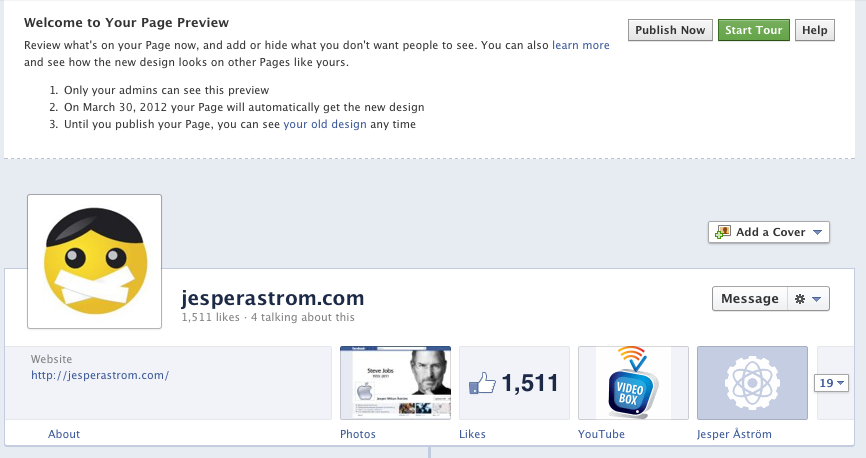
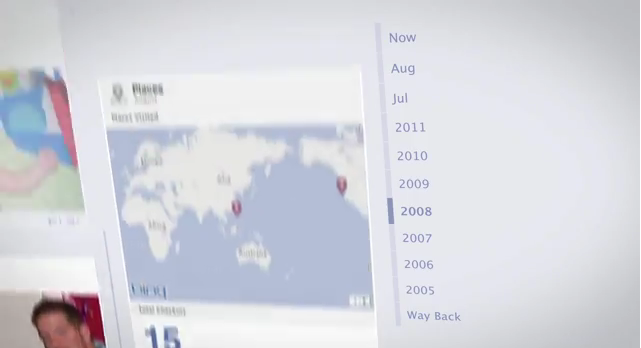
 Facebook Timeline for pages is more than just a simple redesign. It is a new way of communicating on Facebook. Thus I find it important to write a few words on what you need to think about when planning what to put on your page. This blog post will cover the main design elements as well as some of the tactics changes you need to understand before publishing your page. Facebook Timeline for pages – contents of this blog post:
1. The new design of Facebook Timeline for pagesa. The cover imageThe most obvious design change is that you can now post a cover image. Fair enough. You click the link telling you to Add a Cover on the right hand side of the page and then choose to either select one of your posted images or upload a new image. I am 100% sure you will make this happen in a much better manner than I will as I am no designer.
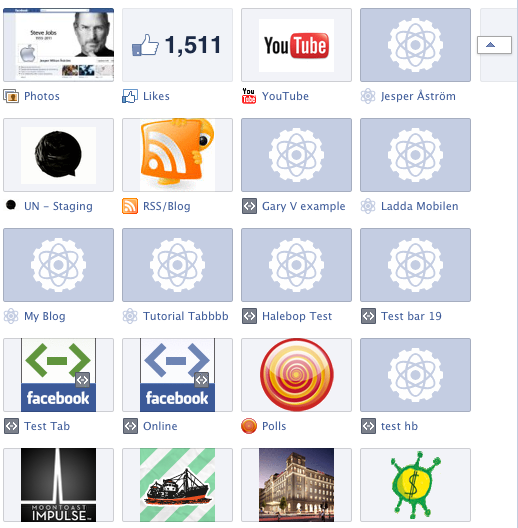
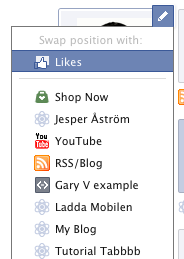
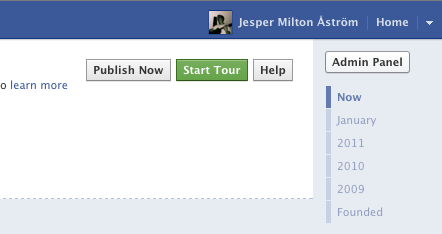
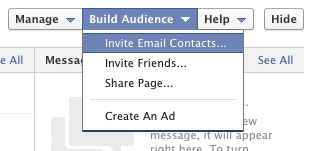
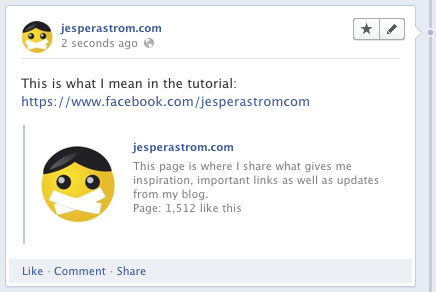
b. The boxesYour boxes displaying your applications, number of fans etc are all there for a reason. You can decide to change either one of them except for the photos one. You can select what image to display as the photos cover image from the photos view. How to change the order of the images: Expand the boxes by clicking the little arrow with the number to the far right. On the first image in this post it says 19 next to that arrow. The boxes should fall out looking sort of like this: Hover one of the boxes and click the little marker that appears. A drop down will come out. If you decide to click any of the options in the drop down the box you have selected will switch places with it. I have now clicked the little marker that appears when I hovered my UN staging app above. If you now click “Shop Now” or “Gary V example”, then my UN staging app will switch places with that app. Thus you can decide what applications are visible for your first time users. I suggest you use the cover photo, the photo album cover as well as the application images in order to direct attention towards like buttons and different such places in order to make your first time visitors convert the way you want them to. I will display further design suggestions later. What we do know right now however is that the before so irrelevant larger application image, now becomes extremely important as it is what will or wont draw attention to your application. 2. A new Admin panelWhat makes me extremely happy is that the admin panel has become more communicative. In the top right corner of your screen, when looking at your page, you will see a link leading to your admin panel. If you click this link a new admin window will appear which will give you the possibility to follow what happens on your page more clearly. Previously you have not been notified properly when a comment has been made on your page. (Except if you are logged in as the page, which no one is) And so it becomes a lot more trivial to work with the Facebook page interface. Notifications and messages also take a more apparent place in the new admin panel view. In the top of your Admin panel view you will be able to find the old “Edit Page” options as well as the Promote your page options. This is a much better way of displaying these options to the user if you ask me. 3. How to deal with applications on pagesThe previous design layout for applications only allowed you to use part of the page width to display your applications. The new canvas page allows you to use applications in a wider space. The top navigational options more easily also allows your users to navigate back to the timeline. I like. The widened space as well as the more cleaner look will allow you to use both top and side navigational elements to your applications making the user interaction a lot easier as you do not have to make your users navigate through the page but you can use the standard top left navigational structure. I hope this will increase flows as well as conversion rates in campaigns. It also allows you to integrate parts of your webshop more easily into your facebook page. My suggestion is that you use one of the top boxes for campaigns and one for communication of page benefits and other such things that you want to communicate on a more regular basis. Or, if you run a online shop, integrate your shop onto your page. It will either way look really sweet as Facebook has removed most of its design elements from this view, which wasn’t the case before. Secondly, you can create timeline boxes for your applications if this makes any sense. These application boxes will become available both on your own timeline as well as on the users timelines. Remember to use this feature wisely as it will otherwise clutter the timeline of the user and make him or her pissed off. I believe you should consider using it if the visitor should report regular activity to their friends through their wall box. Ie. if you are an online retailer you can display items that the person has purchased in this type of box, if you are a game provider you can display achievements in the box etc. etc. 4. How to launch and re-launch campaigns through the Facebook TimelineHere comes the real mastery of the new timeline. There are so many more reasons to push links to your page in every single update. Ie. if you publish a standard question you should use a link back to your Facebook page as the ending of all of them. The reason is apparent – you are now able to utilize a lot more design features on your Timeline page the users, if prompted correctly will be able to explore it as a standard landing page. The focus has moved away from the wall being ONE image. You can now work with each element on the timeline and thus market the living shit out of things from your page display. Considering “Scent” becomes of utmost importance. Ie. that you post something to your Timeline that the visitor will be able to recognize in your cover photo when they arrive at your page. Think about it this way.
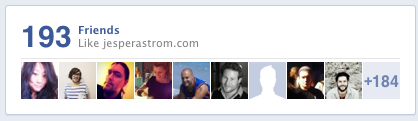
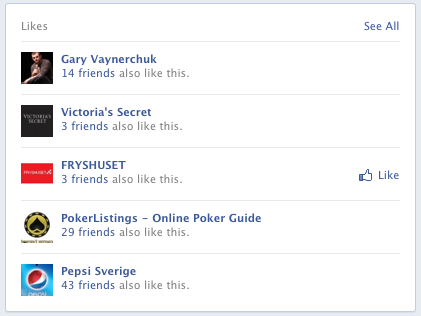
I will try to make this tactic apparent in a test on one of my pages the coming weeks and display the results. Please comment if this makes no sense or if you understand the extreme beauty and brilliance of this idea. 5. Other important elements to considerOne of the new features is that the box displaying how many of your current friends are liking a page, has become a lot more apparent. It thus becomes important to run advertising campaigns that target new fans and sets of fans with different messages. “Be the first to like…”, or “Do like your friends and like…” kind of call to actions become a lot more relevant as this feature has become a lot more evident on the page. Another neat feature is that the pages your page has liked is now more apparent. This will help you direct traffic to such things as product pages and local pages of your brand. I think that’s how far I want to take it right now. I will continue to update this post as I get more ideas on how to use it in a better way.     |
| Black Hat SEO and how to do it Posted: 10 Oct 2011 04:39 PM PDT
 There is this thing referred to as Black Hat SEO. The definition is always debated amongst search engine experts. In Wikipedia they define it as the deliberate manipulation of search engine indexes. If that was the case, then all SEO’s and companies wanting to advance in the search engines, would be black hat SEO employers.
Beginning my Black Hat Tools journeyI have previously bought links. A practice I recognize as gray. I have never hacked a website, or employed automated link building tools to create serious link influxes to my websites. Yes I have actually automated social bookmarking, but not the nasty kind. From today, that will all change. I am tired of not knowing, and will start a journey to research which of the tools out there work and which don’t. I have set a budget of $10,000 USD. My goal will be to purchase tools until that sum is spent. Here are my rules:
What tools shall I test?I have a short list of approximately 10 tools including some I am going to order custom versions of. I suggest you send me an e-mail to jesper.joakim.astrom@gmail.com if you want me to try out your service or if you know of a service you think I should buy and test. Why do I want to try Black Hat tactics?First of all I want to know if they make any sense. Can you still spam your way to the top in Google? I want to learn every detail of executing them. I need to know. Then I want to share this knowledge. What works shall be put into the toolkit. What doesn’t work shall be told. If we are to progress, we need to research, investigate and examine. Plus. I think it will be loads of fun. Feedback. Anyone?     |
| Think Different – RIP Steve jobs Posted: 05 Oct 2011 05:29 PM PDT
 Today is a sad sad day, but at the same time it is a day to celebrate an idea that will never die. Dare to THINK different, dare to BE different, dare to be YOURSELF. For all the “crazy ones” out there. Steve Jobs lives on in our heart, mind and soul.
    |
| Posted: 30 Sep 2011 06:53 AM PDT
 After almost two years as partner and digital director for the ad agency Honesty I have decided to move on. Earlier today, the last details were taken care of and so I am out. It feels weird, but it feels alright. I made my mind up almost 6 months ago when I spent Christmas with my girlfriend. There are simply other things to life than work, and I need to find a way to combine life at work and away from work so that I can thrive in both. Leaving 2 years of HonestyHonesty will move on without me and I believe they will find themselves in good shape. I have loved working with Halebop and Pepsi and haven’t ever experienced such strong relationships with clients before. The stuff we’ve made together has been great and although I am always close to criticizing my work, I am pleased. There have been some great results and some great bumps, but we did what we believed in and what was right to do. Many thanks to Christina and Linda at Swedbank, Malin and Ann-Charlotte at Röda korset, Alexandra at Cancerfonden, Johan and all others at PFO, Lena at Grönt Ljus, Hanna at Mediamarkt, HSB, WGP, Apotek Hjärtat and everyone else who have made me bleed from my eyes and eat 10 Excederin Migraine per day for the past two years. To my co-workers… Love you. In the end I was not very motivated and I sort of crashed this summer. It was as though my body knew that I was getting out of it and decided to take a break. Started forgetting things, mismanaged myself, didn’t sleep, my bones were hurting to the core, and my head was constantly hurting. In late July I found out I was both celiac, had a bacteria in my stomach and a mouse arm. I’m getting old. My body doesn’t like me anymore. So what will I be doing now?
friends with their strategy. I will also pick up on my poker career and have planned for two or three bigger tournaments this coming year (amongst them the WSOP in LV next summer). I am not allowed to work over here yet so right now I will be spending my time relaxing and…
In the next few months however I will most likely work together with an old partner to finalize a gamification platform as well as a casting platform that can be used for a new type of recruitment process. We are done with the technology parts of them, but we need to package the deals and create a few more cases than we have right now. In December or early January we will be launching “a thing” that for sure will make a dent in the current web market. I am talking to investors about it and we should be operational on a larger scale in the end of Q1.     |
| Posted: 27 Sep 2011 02:26 AM PDT
 If you want your texts to be readable by many people, you need to write in a way that people understand. Simple enough, right? The easier to read, the more accessible. Simple is better than difficult and short is better than long. I have regularly fallen victim to my own ego when writing tutorials extending them beyond the limits of what is readable on a regular screen. Thank God for mobile devices making long texts readable again. In the eyes of Google, the texts on your website are basic, intermediate or advanced. That is, the reading level of them. Yeah, Google actually tries to understand your texts and then categorize them under basic, intermediate and advanced labels. This is a natural evolvement as Google wants to rank the most relevant content in the top of the search engine. If a user cannot understand the content Google serves, the search result will be less relevant than one that the user actually gets. Write for the level of your audienceBut hold on. Traffic is really just one aspect of SEO. Don’t rush out and rewrite all of your texts just yet. Traffic might be lower as a result of getting only people with an advanced reading record to your website, but perhaps it doesn’t make your website less relevant for these users who actually end up there. I guess the thing here is to know your preferred/converting visitor demographics/sociographics and write for them. Consider a camera retailer. You are selling cameras and you hire the photographer nerd of a lifetime to write your copy. The person will write about the camera knowing all the right jargon. Have a look at this camera description from Amazon below. (click on image to get to site) The standard camera buyer might not know all the widgets, gadgets, settings and data that needs to be in place for the perfect shot. They might be searching for terms such as cool cameras. As on many camera websites, the only info you get about the camera is this info. I would say it is advanced, and so would probably Gooogle. Thus, although it is long tail, it will probably have a difficult time ranking on its own if there is a page with both this information and less difficult info to grasp. Ie.
Amazon realizes that it doesn’t have the resources to rewrite all product descriptions in its database and thus it allows for user reviews where the product usage and likability can be discussed. Naturally, the more common the language, the tougher the competition (hopefully) and the more potential traffic. By using both you are covered in the advanced long tail as well as in the common peak. Now consider poker affiliate, a perhaps more clear example.
Perhaps they are on the level of flop, turn and perhaps river. When hiring an experienced poker player you might get the attention of the loyal poker elite, but you might not get the attention of the beginner. They might on the contrary be scared by your advanced level and think that it is not for him or her. The reading level of your content thus becomes significant not only for the kind of traffic you get to your website but also what kind of conversion you get out of that traffic. Does this “REALLY” matter for rankings in the search engine?So, does reading level have anything to do with SEO and the results in the search engine? Google’s latest update called Panda seemingly punished those who use complicated or more advanced texts and premiered those who used easier language. The job of an SEO has traditionally been to collect links, and it will probably be the core of the work duties for quite some time on from now. However, since the Panda update I have several tutorials that rank the living shit out of websites that have four or ten times as many links as I do. Perhaps not because the level of the tutorial, but more likely because of their length. I believe, as I have often argued, that many SEO’s need to update the way they target themselves. From traffic, to conversion rates. Conversion rates are the true measure of content quality and should thus be used as the main metric for relevance. I think that if we shift into measuring conversion rates in front of traffic increases, the content quality – reading level, will improve as a result. How to find the reading level of your websiteIn order to find out the reading level of your texts you should write site:yourdomain.com in the search field of a Google search engine. This will list all the pages of your website that Google have indexed. To get the above percentages you also need click the reading level link which can be found in the left hand navigation of the new search GUI. //Jesper
    |
| Facebook Timeline and the return of Gifts Posted: 23 Sep 2011 01:01 PM PDT
 Facebook Timeline and Open Graph was released on F8 this week. The return of Timeline is a nice and well anticipated one. Back in 2007 there was a similar function to timeline where you could see a persons activity and information placed on a timeline. This was nice as you could show your previous relationships, work places and other such static data in a way that makes sense. What is added to this new version is the ability to post interactions with others and apps on the timeline. Also, there are many, quite significant user interaction improvements and design features to it. However, the functionality is nothing new. Facebook TimelineThe new Facebook timeline will probably give Facebook an opportunity to introduce and reintroduce some products in their marketing portfolio.
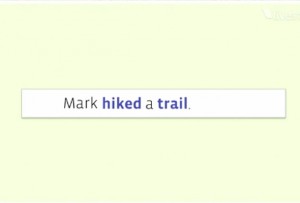
Open Graph – Facebook Verbs
When I make a search today I am unable to do a search such as “books that my friends like” or “books that several of my friends have read that I haven’t read”. We rather have to do a search that focuses on the category of the book or perhaps the title. By opening for a more semantically interrelated web, we can move beyond this and create applications that can truly answer questions we ask. As a business solution, you know I have wanted a way to use Facebook for agent affiliate for a long time. You know. I plan a trip, an agent markets themselves against people who are planning a trip. They give me a dynamic offer that gets cheaper the more friends I get to buy the same deal. Everyone pays for themselves. Perfect. I no longer have to be the one collecting and never being paid the accurate amount as the social group organizer. This would be a great way for Facebook to earn more advertising money, but also earn CPO money such as Deals was intended to. I have elaborated a bit more on this in my post – what should Mark D’Arcy do on his first day at facebook.     |
| Posted: 16 Aug 2011 01:55 PM PDT
 If you ask John Ekman, it does in some cases. As he writes in his blogpost on The Unbounce Blog – Why über-Optimised SEO Titles Kill Click-Throughs & Conversion Rates, sometimes the effort to optimize for the search engine defuses the call-to-action copy needed to actually make the clicks count.
It is nice to get loads of bulk traffic as it is usually easily reported to the client. “Look, traffic is up – YEY – Now pay me!“. However, in the long run, it only hurts the business. If you deliver air and sell it as gold, then the client, or the client’s boss will eventually leave you. What’s worse is that they will probably leave SEO as a practice for marketing in itself. Their conclusion of such efforts will naturally be that “SEO-traffic doesn’t convert“, which is a load of shit. Understanding the searcherAnd it is in the context of this that John’s blog post becomes extremely interesting. No, he’s not calling anyone an idiot, I am. However, he clearly shows more understanding for SEO than many of the “ranking-focused” “professionals” out there. What John’s blog post is about – for me – is to confirm that the correct focus for any SEO should be conversion. Not traffic. And they should be measured on how much they convert, and moreover, get paid great bonuses – long term – for improvements made in the conversion rate of the SEO traffic. Cause anyone with the right tools can rank a website. You need good, quality content, which can be bought. You need good, quality links, which can be bought. You need accessible technology, which can be bought. But what you cannot buy, is the understanding of your customers and what makes them tic. Sure, you can hire a conversion expert or perhaps a good SEO with a focus on conversion, however, they rarely have the segment insights and knowledge about the clients that you do. They can at best watch the data and make suggestions on where/what you should rank. Which is actually not a bad practice. But you will have to accept that this takes time if you cannot provide them with this information yourself. And time cost money. If you have it, then good for you. Pay up!! However, if you do not have the money to hire the best in the business, then you’ll probably better off paying to increase sales on existing traffic than paying for more traffic. 80:1 relationship of today’s marketingWhich brings me onto the next topic John’s blog post reminded me of. Today, companies pay 80 dollars to get traffic to a website for every 1 dollar they pay to do something with it when the traffic actually gets there (Omniture numbers). Let’s say it one more time. Cause it is really sickening when you think of it. There is an 80:1 relationship in the spending between getting traffic to a website, and doing something with it once it gets there. Is it just me, or would possibly a better logic be to do the opposite? Perhaps not, but the ratio is simply not justifiable. If the ratio was 8:3, then it would possibly be acceptable, but not 80:1. The problem with averagesI believe the biggest crook in this whole mess, and the reason of why we are where we are lies in averages. As humans we want comparatives, and since we most commonly like to compare ourselves with people/corporations that are like ourselves, we create industry averages. The problem is that we settle with these averages, and take them as a justified excuse/truth when our pure logic/rational/instinct should tell us otherwise. For example, we accept a 50% bounce rate as an ok average, ie. we think of it as acceptable that 50% of the traffic coming to a website leaves it without visiting any other page on the website (GA definition). We accept that the average conversion rate (industry independent) is 3%, meaning only 3 out of every 100 visitors of our website buys something. We accept that the opening rate of our e-mails are roughly 20%, which means that 1 in every 5 who have opted in to our e-mail send outs care to open the e-mails we send. Really… why do we do this? So why is John’s blog post important?Well, it is evident that John possibly don’t spend hours in the SEO forums reading up on the latest of discussions. SEO’s out there will probably crack down on him for giving them a running nose bleed. However, I believe the topic of CTA’s in titles instead of broad match keywords is probably one that needs some further digging. The reason being, SEO’s out there still do a shit job. The real problem with any marketing effort today is focus. If sales, downloads, sign-ups, shares or invites is the goal, then focus should be on increasing these metrics. Not on mere traffic. The problem is that nominal traffic numbers generally decrease as a result of such work and since marketing managers are measured on traffic, this creates a problem. As usual, I don’t know if this makes any sense, but, I found it important to share. Please comment if you got some thoughts or criticism. Am I off beat? And… ps. sorry John if I “mass-interpreted” you…     |
| Comparing Facebook Deals and Groupon whilst recognizing Google will win the war Posted: 12 Aug 2011 04:40 PM PDT
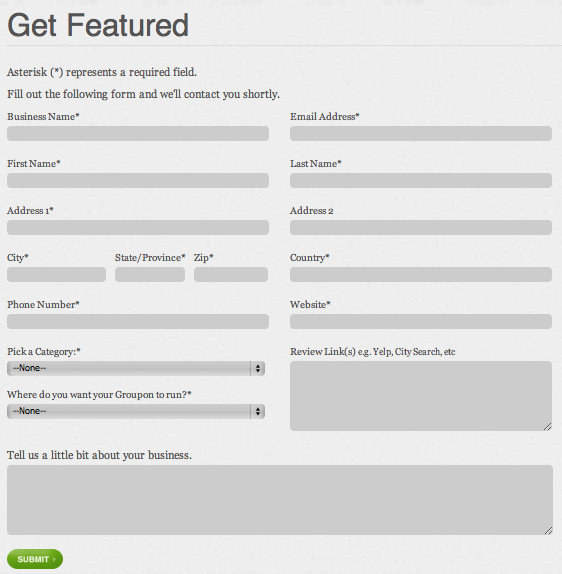
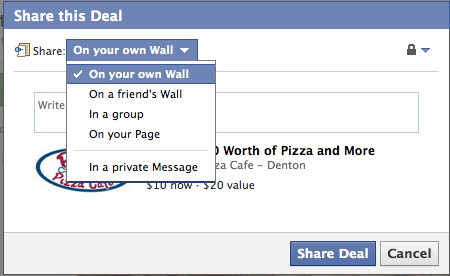
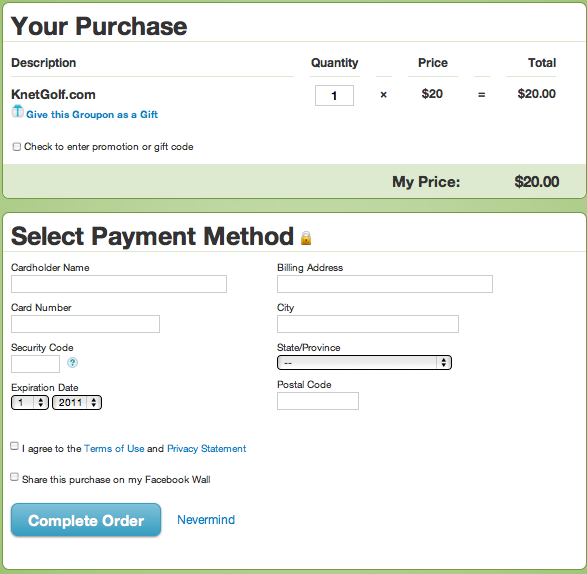
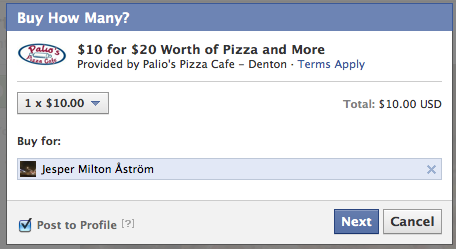
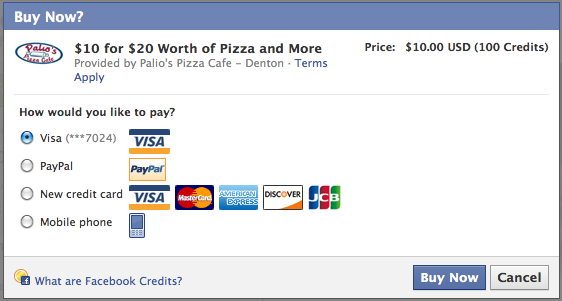
 Traditionally, there has been something magic with a coupon. Just like a wink of an eye, it communicates a two way relationship between buyer and seller that “hell yeah, we’re loyal to each other“. It is in some way romantic exchange between John and prostitute, when the pimp isn’t looking. “Oh, wait, I have a coupon for that…“, “Oh, do you now…“, “It is just here in my purse, hold on one sec…“, “Gold memeber, I see… welcome back mrs. Andersson…“, some coupons more embarrassing than others. Hotels had a successful rebranding of the coupons, calling them vouchers. Some even put their coupons into cards, calling them reward programs. *sigh*… The evolution of the coupon is as fascinating as it is sentimentally draining. A deal is always a deal and it touches my heart whenever I see a well phrased offer. Of late, coupons have started to move into the digital space. Well, coupons have been there for a long time, but not the kind of coupons that you bring into an offline store and hand of in an intimate moment with the cashier. No. As the mobile web expands, these new types of digital coupons have started to overwhelm our lives to a greater extent than the ol’paperback. On the horizon there are about a million competitors trying to battle it out in being the sole distributor of these digital coupons. Although I believe neither of them are employing a long term successful strategy, I still think that they are the two who will give it a run for the money. Naturally I’m talking about Facebook Deals and Groupon. #1. The setup of a dealFacebook Deals is still only available in Atlanta, Dallas, Austin, San Diego and San Fransisco which is a great weakness. Neither Groupon or Facebook Deals allows you to post a deal on your own. Groupon wants to review your deal and contact you “shortly” and provides a silly little non-optimized web form for you to fill in your business story in. Facebook doesn’t let you fill in any form at all. They simply state that they are currently working with “…aDealio, Gilt City, HomeRun, kgb deals, OpenTable, Plum District, PopSugar City, ReachLocal, Tippr, viagogo, and zozi…“. According to me, these strategies seem extremely costly and I don’t understand why there isn’t a way to just fill in my offer and then let it sliiiiide through the Internets like a hot piece of cheese on a… hmm… you get what I’m getting at. #2 Deal displayHere is something both have got quite nicely right. Both of them make a big fuzz about the count down, they both clearly show what you save and they both show the price you pay. The only difference in call to action is that Facebook Deals uses “Buy for $XX” meanwhile Groupon simply uses “Buy” plus the prize to the left of the buy button. Groupon deal displayFacebook Deals deal displayNaturally, Facebook Deals is superior in the ways you can share a deal. The only thing missing is probably to share it in a text to someone’s mobile or to “people nearby”. Ie. if I am using a deal and want to share it with my friends who happen to be in the same mall as me, or have checked-in close buy, then I should be able to send them a push notification through the mobile. Groupon however has a functionality that I believe Facebook Deals really should focus on getting as well – Buy it for a friend. As I have written previously, Facebook Deals would be a great tool for group purchases. Ie. if a friend has a birthday, my buddies and I should be able to run a pot of money where everyone could give as much or as little as he or she wants to the pool. As the amount of money grows, more deals become available. I really don’t understand why Facebook has this already. They used to have it in their digital gifts store in the early days. You remember, when you could buy “megaphone time” and “digital badges” to your friends profile pages. Ha ha… I remember my boss invested a shit load of money into enabling a customized gifts store on our page when I worked at a “large fashion company”… Although the guy was one of the most daring digital personalities I have met in the corporate world, and if we would have just had a bit tinier egos, we would have made a perfect team, that decision was ludicrous. However, back to the comparison. Groupon has got it right. Gifts is big business online, and they are taking full advantage of that. #3. Buying a dealI must say that I prefer Facebook Deals two step approach in the jQuery looking pop-in, over Groupon’s one step check-out. I suppose it has to do with preference in some way, however, the golf balls don’t feel as tasty when I can no longer see them which might impose a slight hesitation when I complete my purchase. One of the rules of improving conversion rate is to maintain scent. Ie. The user seller should confirm that the user is still on the right track on claiming the purchase they first entered to complete. The scent is built through the use of consistent colors, call to action, price levels, discounts, buttons, and images throughout the complete check out process. If they change too much, a user gets confused and might think that the vendor is trying to fool them or that they have ended up in the wrong place and thus do not complete the purchase. One of the greatest lessons in conversion rate optimization I’ve ever learnt is that customers are stupid and they know it. Thus, they expect to do it the wrong way and try to find every excuse to blame stupidity in not completing the purchase. Thus, over confirm their every step along the process. (don’t misinterpret me there please…) Groupon check-outFacebook Deals two step check-outStep 1 Step 2 Why Facebook Deals and Groupon both will failThe technology of creating a digital coupon is becoming increasingly available at very affordable prices. In fact, it is free to create many digital coupons already. Distributors of QR-codes and other such solutions have made it extremely simple to adopt the new technology and thus the cost is very limited. Neither Facebook Deals or Groupon takes on a strategy where they become the distributor of existing deals, but they create unique deals on their platform. Although Facebook has noted they are trying to make their deals more social, I suspect they will focus on the sharing of existing deals, rather than the submission of social deals, ie. an offer that I find interesting to my friends, or an existing offer in a store that needs to be digitalized in order to reach its complete audience. As a customer I want to walk around town and get ALL available deals in one device. I don’t want to flip around between native apps to try and find what might interest me. Here is a great void in the industry, one I think Google will eventually fill with its superior insight in user search preferences and geo location/maps. Facebook can still steal this void in front of the noses of the others if they make it possible for me to post my best deals onto my wall. Ie. the deals I find are good offers. That way they will create a natural place for deals in the sharing space. Ie. (loads of the ie.s now…) Users are more likely to look at the deals purchased by businesses if it is mixed amongst the deals friends have posted, or if they are in the same format on the wall.     |
| Cameron vs. Free speach – a true but frightening story Posted: 11 Aug 2011 01:14 PM PDT
 David Cameron, the UK prime minister has announced that he “is looking at banning people from using social networking sites such as Twitter and Facebook if they are thought to be plotting criminal activity“. Fair enough. If you’re a government official and want to crack down on crime, one of the best ways to gain an advantage would be to control their possibilities to communicate. However, just as my fellow Internet buddy Deeped writes in his blog post, this kind of control comes at a very high price. As he puts it: Which in English sort of translates to:
As usual, with political leaders all over the world, they seem to have lost track of who they are working for. Although Cameron, possibly, has good intentions with suggesting these types of changes, he is still full of crap for suggesting them. Who is to decide who is likely to plan criminal activities? I who thought that pre-emptive strikes was to take it one step to far. Ie. when you know that someone is planning something, you take action before they have actually performed a hideous crime of some sort. If I think twice about what Cameron is saying, they want to close the possibility of people accessing these social networks, before they have started planning criminal acts. On what basis? Who makes the profile for who is more likely than another person to become a criminal? Social profiling – perhaps? Secondly, rioters are in the eyes of the law criminals, but in the eyes of the rioter, freedom fighters. We might not agree with the methods, but they are an expression of a deeper problem in society, one which we cannot turn away from or try to close down. We have to fix it. Not turn away from it. Social inequalities and violence has had a correlated “positive” relationship for years, yet social reform, is still frowned upon by the market, governments and the leading powers of society. I am not saying socialism, but I am saying that we need some world wide change in order for me to be able to enjoy my money, not just have it. What I am talking about is social liberties. The right not to get judged based on the color of my face, my sexual orientation, my political beliefs or the way that I dress. Those are deep things we need to fix yesterday. It is the social inequalities that are driving our society into these situations where people feel trapped and unable to get out of the shit they were born in. More directly I am talking about getting more demographic diversity into the leadership of nations, companies and decision making all in all. That is what is going to change the situation. By banning people from expressing themselves will only increase the pressure in a pot that is already at boiling point. It is thus not only a very difficult proposition, it is also the wrong one as it is not the solution to the problem. I am eager to see how the rest of the “world leaders” are going to respond to what David Cameron has proposed.     |






 I am currently living in the US. For now I will be working with SEO and PPC as well as help some old





 I fully agree with @deeped that the notion of closing down, or separating some people from the possibility of communicating freely and openly online, will only hurt democracy, security and our possibility to avoid these kind of problems in the future.
| You are subscribed to email updates from Jesper Åström - Ideas worth keeping to yourself To stop receiving these emails, you may unsubscribe now. | Email delivery powered by Google |
| Google Inc., 20 West Kinzie, Chicago IL USA 60610 | |

Niciun comentariu:
Trimiteți un comentariu