25 New Social Articles on Business 2 Community |

- 5 Best Blogs for Bloggers
- 3 Tips in Creating Social Structure in Your Business
- What Everyone’s Forgetting: Test Your Social Media Strategy
- 2012 Election Politics & the Impact of Social Media
- Lessons From This Summer’s Biggest Social Media Blunders
- Delhi Duty Free Fails To Impress On Social Media
- How Do You Measure Social Media Success With Google Analytics? [VIDEO]
- Social Media Conversation Points to a New Generation of British Sporting Heroes
- Team GB: The Social Media Rankings 8/8
- Show Me the Money: Proving ROI for Social Media
- Maximize to Monetize Your Social Business – Leverage What Ya’ Got!
- Social Business Gets Real
- “Social Media Is About Talking With Your Fans” – The Raghu Dixit Project
- Avoid These SEO Mistakes in Your Content Creation Efforts.
- Top 5 Twitter Lists for Marketers
- IBM Report: “CEOs Expect Social Media to be a Key Client Engagement Tool”
- The Social Media Oracle: Can Social Media Predict the Latest Consumer Trends?
- Gartner Cites Importance and Potential of Social Media
- 3 Simple Powerful Reasons Google+ is Good for Your Business
- Keep Your Social Media Accounts Secure
- Colour Your Day With Amul PRO’s Fun Facebook App
- Floost Is More Than An Interest Based Network [Review]
- Don’t Mess with Reddit (or Texas)
- 3 Tools to Help You Master the Art of Unfollowing
- Klout, You Are An Evil Social Media Mistress.
| Posted: 08 Aug 2012 03:05 PM PDT “Want to learn how to start a blog?” “Need to know how to make a blog popular fast?” “How about getting all the latest blogging tips and tricks?” If you aren’t already, you need to follow the best five blogs for bloggers listed in this article. This list will show you where to find the best information and advice for bloggers and businesses looking to drive traffic and make money online. In order to give you as much value as possible in every aspect of blogging, each blogger included in this list has a slightly different focus – i.e. marketing, SEO, blog writing, business, social, and so on. Top five resources for bloggersThis list was created using a combination of my own experience in learning from other bloggers, and overall popularity on third party blogging sites like Technorati, or global site rankings on Alexa. All of the bloggers listed below are worth following on Twitter in order to keep an eye on their latest blogging advice, tips and tricks. 1. ProBloggerProBlogger is a blog by bloggers for bloggers run by Australian blogger Darren Rowse. I like ProBlogger because it provides an overwhelming wealth of information about every aspect of blogging. Darren and ProBlogger have been in the blogging industry for many years and while many of the posts on ProBlogger are from guest bloggers, Darren does a good job of ensuring that only quality posts are published on ProBlogger. What you will learn from ProBlogger: The best way to describe what you stand to benefits from ProBlogger is that you learn how to be a blogger. I’m not talking specifically, how to set up a blog and write something, I’m talking about how to actually live like a blogger. A lot of the information on ProBlogger focuses on how to manage your own time, how to motivate and inspire yourself to create a better blog and blog content, and so on. Don’t disregard the human aspect of blogging… we are, after all, human. 2. QuickSproutI like Neil Patel’s QuickSprout because of its focus on real-world techniques. Neil has a no-nonsense approach to content, and I recommend that any blogger looking to get serious about SEO and the business of blogging follow him. Neil has worked on some of the world’s most popular Web real estate. He has helped huge sites get even bigger. The fact of the matter is that he knows what he’s talking about, and the advice he gives is based on his experiences. What you will learn from QuickSprout: QuickSprout is very good at providing a scientific method to all things related to growing a website (blog) online. Many of the content tips and tricks that Neil talks about are based on hard evidence (generally analytics data), experience and good research. QuickSprout is a great resource for bloggers who feel they aren’t getting enough direction from other blogging resources. 3. Google Webmaster ForumsOk, so this isn’t a blog. But this list is all about providing you with the best resources you need to succeed as a blogger. Google Webmaster forums are an important source of information for learning about Google, SEO, analytics, and how to use the tools Google provides to ensure a steady and growing stream of high quality organic search traffic from Google. What you will learn from Google Webmaster Forums: Not only will you find many other bloggers and webmasters who have similar problems (to any you experience during the course of writing and maintaining a blog), but there is a wealth of experience in all things Google hanging around these forums. The forums are also an ideal place to actively get answers – since most bloggers don’t offer a forum, or don’t have the time to answer questions in the comments. 4. Business2CommunityBusiness2Community isn’t a blog; it’s a curator of blog content. Much of the focus of the content on B2C is on marketing and social media, but I have included B2C in this list because it provides a great overview of the latest blogging, social, SEO, and marketing tips and tricks in the industry. In addition, B2C is a great place to find and connect with other bloggers in order to grow your social influence. While I tend to shy away from sites that offer syndicated content in general, there is an undeniable benefit to keeping an eye out for potential contacts who may be strategically important for growing your blog. What you will learn from Business2Community: B2C is a perfect companion for any blogger looking to expand their general knowledge of SEO, marketing, and social media. All super important for growing a blog. 5. SEO EntrepreneurSEO Entrepreneur, by David Mercer, is a blog that focuses on growing businesses online using content, blogs and blogging techniques. This unique approach to blogging means that SEO Entrepreneur provides a rounded approach to blogging that includes everything from using great Web design, to SEO, to analytics, networking, business, marketing, social, and more. What you will learn from SEO Entrepreneur: David has a strong focus on the technical aspects of creating a blog that will outperform other blogs in terms of performance, SEO, and content quality. Some of the most popular articles on SEO Entrepreneur include:
SEO Entrepreneur also offers a Q & A Forum where bloggers can ask questions about any aspect of blogging and get an expert answer. Do you follow other bloggers that you think should be mentioned in this list? What are your all time favorite blog posts that have taught you something invaluable about blogging? Share your blogging tips, advice and experiences in the comments below, or join me on Twitter, LinkedIn and Google+ to continue the conversation. |
| 3 Tips in Creating Social Structure in Your Business Posted: 08 Aug 2012 02:45 PM PDT I have seen this year at the 2012 London Olympics how controversial tweets from athletes have sent them packing. In a business, a status or tweet bashing your boss or sharing confidential company information can have you fired, not to mention serious legal ramifications. The infamous saying “think before you speak” seems to be the classic response. How many people actually recount that phrase when typing? It is so easy to hit the “send” or “enter” without realizing that your life can change in a minute because what you intended to post was taken out of context. A single impulse action can have serious consequences, however; we tend not to see that at the time. What we have to understand is that we are all human, and that acting in an impulsive manner is foreseeable. In fact, our economy thrives on impulse purchasing behavior and with the evolution of social and mobile it is only increasing. Social media gives us a platform to convey our thoughts and feelings instantly – both positive and negative. To some, “Real Time Data” has become a “Real Time Problem.” So how can we handle this double edge sword in business? Here are my 3 tips for creating social structure at your company:
|
| What Everyone’s Forgetting: Test Your Social Media Strategy Posted: 08 Aug 2012 02:40 PM PDT Imagine for a moment you are about to embark on an endeavour that is both unknown and unpredictable. You've refined and developed a strategy that you or your company has deemed promising. Resources are adapted and positioned. Your organization has set certain goals and benchmarks that should provide some insight into your progress. This may seem remarkably astute and managed for risk. Preparation for the unknown is important, is it not? Strategic planning is akin to an intricate and detailed roadmap. Often times these plans are deliberated, calculated and lengthy. Strategy is a necessary function within any industry, especially brand, marketing and PR. What isn't common is testing. At times it can be perceived as a tactic that isn't suited for larger companies or creative campaigns. However, the assumptions that one holds should not be perceived as definite—that is until proven to be more than mere hypotheses. The benefits of social media are vast, but what many forget is that they are not guaranteed—nor are they static. They are malleable, fluid and never the same. Many companies perceive social media to be a sales tool; to others it may be used for listening or thought leadership. While each strategy may be appropriate, they are all initiated on assumptions. What Assumptions is Your Company Holding? Whether we consciously identify with them or not, each one of us holds certain assumptions that influence our decisions. These assumptions—or hypotheses—are necessary for innovation. For instance, if your company is about to launch a social media campaign that seeks to build its thought leadership profile through LinkedIn and a blog, your team is taking action on a wide variety of assumptions, which include:
While this list is not finite, it presents a picture that identifies how a simple decision (using LinkedIn and a blog to boost thought leadership) is based on a number of integral assumptions that, if incorrect, would be a waste of resources. Approaching Assumptions Many, if not all, decisions are formed on an assumption. In the past, there have been ideas and decisions that have revolutionized industries, markets and products. However, in order to limit waste (capital, human and time) success hinges on whether that assumption was correct in the first place. In order to reduce waste and increase the chance of success we need to test our assumptions in a way that allows us to learn. If our tests indicate that our assumption (or idea) is correct, we know that we can proceed in a way that may in fact yield sizeable benefits across an organization. However, if our tests indicate that our initial assumption is wrong, we can absorb that data in an effort to either reconstruct our model or abandon our initial idea and shift towards a new objective. Testing Conceptualization is an advantageous process. Take for instance that initial company who wanted to increase their thought leadership through LinkedIn and a blog. Their assumptions can be tested in a way that reveals significant insight, but only requires a minimum level of implementation (i.e. rather than running the entire strategy on that assumption, we can build a limited version to generate data).
Strategy Development It is counterintuitive to deploy a multichannel content strategy that is based solely on an assumption. We wouldn't invest in a company without performing due diligence, so why don't we take the same precautions with social media? It's because social media seems simple and the benefits easily obtainable. This view causes a company to waste significant amounts human capital, time and financial resources on campaigns that fail to achieve anything substantial. Before delving into social media, take the time to break down your strategy into its assumptions. Then, test those hypotheses through quantitative and empirical research. The insight gained through the testing process is invaluable in more ways than one. How does the saying go…measure twice, cut once? Seems appropriate here. |
| 2012 Election Politics & the Impact of Social Media Posted: 08 Aug 2012 02:10 PM PDT
Readwriteweb.com reported on Wednesday about Twitter's new election index that looks at the millions of tweets written each day about both of the candidates. The Twitter Political Index is the first of its kind because it doesn't ask specific questions to cater towards a certain candidate, but instead it measures the unmediated conversations between users. Twitter takes these numbers, 4,600 tweets per second (tps), to be exact, and separates them between Obama and Romney then analyzes the statement. The social media conglomerate compares each and every tweet to the overall feeling about the candidates and gives it a score out of 100; a score of 50 is a neutral statement so anything above 50 is good, and anything below is bad. The "Twindex" is shaping up to be the Gallup poll of the social media age. Unlike the Gallup poll, which is scientific, this index strictly measures the straightforward conversations and reports the results in an easy to read, unbiased line graph. Campaignpop.com is another website that compares the tweet sentiments and the numbers of Twitter followers/Facebook fans of Obama and Romney. As of today, the overall feeling on Twitter is a -19 for Obama and a -44 for Romney, basically saying that the Twitterverse dislikes Romney more than the dislike Obama. This website also offers a feature different from the "Twindex." It separates the tweets between Obama and Romney and then categorizes them between all the states. It then takes these numbers and divides them between positive and negative, so you can see, for example, in New York, of the 7,393 tweets about Romney, 1,004 are clearly positive and 2,954 are clearly negative. The difference is assumed neutral. Because these conversations are completely uncensored, these results will be better predictors than those of the planned scientific polls. It will be interesting to see if the index's results will in any way foreshadow the upcoming election on November 6. |
| Lessons From This Summer’s Biggest Social Media Blunders Posted: 08 Aug 2012 12:50 PM PDT
Summer '12 has been full of such incidents. The ways brands have responded to controversy and handled themselves in times of disaster are telling case studies in a changing brand-and-consumer landscape in which social media facilitates justice, empowers the understandably outraged and forces issues of concern to the forefront of the public discussion. Come along as we dissect the ways in which four companies responded to backlash, with varying degrees of success, this season: Burger King, the NRA, Celeb Boutique and Chick-fil-A. Burger KingLittle did you know that when Burger King says, "Have it your way," it really means "Have it our way." At least that's the message that was sent when an employee posted a photo of himself standing in tubs of lettuce while wearing dirty sneakers. The employee posted the photo to 4Chan, an online image forum for anonymous users, on July 16. Though the hacker-oriented community usually engages in similar forms of pranks and debauchery, fellow 4Chan users were less than thrilled by the disgusting implications for the national fast-food chain. Fortunately, several of the tech-savvy users, using geo-tagging, were able to identify the culprit within 15 minutes and wish him a "happy unemployment." Burger King, for its part, took swift and appropriate action on hearing the news that employees at the fast-food chain were yet again up to unsanitary pranks. Director of global communications Bryson Thornton responded to the incident: "Burger King Corp. has recently been made aware of a photo that shows a Burger King restaurant employee violating the company's stringent food handling procedures." He followed this by saying that the specific restaurant in question was an independently owned franchise that, with the help of 4Chan, had identified and dismissed the three employees involved. Most people's immediate reaction is to wonder why any employee would think that pulling this stunt was even vaguely a good idea. But the more important, looming question is whether Burger King's response to the situation will be enough to reassure customers and persuade them to continue patronizing the chain. I highly doubt that Burger King is the only restaurant where this kind of behavior occurs. But I know that Burger King is one of only a few that are continually getting caught. (Who can forget Domino's?) From offensive advertising to this type of unsanitary prank, Burger King's not exactly keeping itself in the good graces of its customers. So while the decision to fire the employees in question was obviously the right one, how about announcing a large-scale employee-training program? Give the public a concrete reason that this will never happen again. And honestly, even if something similar does happen (and it probably will), how about more-stringent video camera surveillance and rule enforcement in each chain to make sure it doesn't make it to the public? Sadly—and especially because this kind of thing's happened before—this incident will go down as another Burger King fail. Regardless of how good the company's apology was and how promptly it responded to the situation, it cannot control the response that comes over social media. Not to mention that the BK Facebook account is void of any recognition that the event ever occurred. Thornton's statement alone, without backup by some response across Burger King's Facebook, is not enough to combat faux advertisements that mock the brand. When it comes to public health and putting sanitary food into the mouths of their children, parents are not likely to continue to choose Burger King over other fast-food chains that haven't experienced the bad press. Our advice to Burger King: Accept responsibility, make amends and take visible steps to change the behavior—even if it was, in fact, isolated. Do it publicly, via social media. The NRAOne of the most important responsibilities a community manager has is to be familiar with current events. Messaging simply cannot exist in a bubble and focus solely on the brand. Brand marketing on social media isn't about selling; community managers are not salesmen. A healthy mix of promotional messaging, community-building interaction and personal-response work is required for success. Building a community means interacting with consumers, covering subject matter that is relevant and responding to national events, and doing it all in a consistent tone. Consequently, the failure to respond to national events can seem not only careless and ignorant but, in the case of the NRA, insensitive and offensive. Hours after the midnight shooting took place in Aurora, Colorado, the NRA published the following tweet: "Good morning, shooters. Weekend plans? Happy Friday!" Not surprisingly, the Twitter community went wild with outrage over the organization's insensitivity and ignorance of current events. Around 3 p.m. that day, the @NRA_Rifleman account, which previously had around 16,000 followers, was deleted from Twitter. NRA spokesman Andrew Arulanandam publicly apologized for the incident and told CNN that "a single individual, unaware of events in Colorado, tweeted a comment that is being completely taken out of context." It was later revealed that the tweet was published through HootSuite, a program that allows users to schedule tweets in advance. Community managers: Don't set it and forget it. We're not denouncing automation in certain cases, but if so, keep your publish dates in mind and your eye on the news. Use the efficiency gained by scheduling in advance to keep your finger on the pulse regarding current events and the industries in which you have discussions.
While admission of guilt is the standard first step in PR damage control, I would have liked to see the NRA (regardless of its views on gun control) sound a bit more genuine by expressing sympathy for lost lives and apologies for its offensive, albeit unintentionally so, comment. But deleting the Rifleman account should never have been an option. Given screen shots and the overall amount of sharing that occurs across social-media platforms, brands have an inherent need to be transparent lest they look irresponsible and cowardly. The NRA would not intentionally and soullessly make a joke about the murder of American citizens, but deleting the account after a supposedly innocent remark does not make a strong case for the claim that it was an accident. A brand that regularly and actively makes use of social media has to be equally up-front when something goes wrong as when everything is going well. The NRA already regularly receives heat from the American public, so how can the organization recover from this incident when deleting the account makes it look as if it had gone into hiding? Well, since it defends the right to keep and bear arms, wouldn't this have been the perfect opportunity to clarify what types of arms it defends? Would it not have been the right time to condemn what took place and take a stand against gun violence? Social media doesn't wait for anyone. Don't delete the account that started it all; use it as a way to quell unrest, clarify positions and conduct a productive discussion. Celeb BoutiqueJust as the NRA did, Celeb Boutique published an insensitive and oblivious tweet on the day of the Aurora shooting. At 1:35 p.m., @celebboutique tweeted, "#Aurora is trending, clearly about our Kim K inspired #Aurora dress ;) Shop: celebboutique.com/aurora-white-pleated-v-neck-strong-shoulder-dress-en.html." This tweet is infinitely worse than the NRA's because it makes specific reference to the fact that "Aurora" is trending on Twitter (thereby also showcasing the brand's social-media savviness), so the brand cannot use the HootSuite excuse. How sad is it that a company would assume that all its followers on Twitter suddenly, in one morning, became obsessed with a dress called the Aurora inspired by Kim Kardashian? The tweet could be perceived as tongue-in-cheek, but there's something incredibly important that Celeb Boutique failed to do: Know what you're tweeting about. Never assume anything about a trending topic; do research and uncover what all the fuss is about first. Celeb Boutique initially dealt with its mistake with a string of tweets blaming its foreign PR company. Not the classiest response. Though deleting a tweet usually seems dishonest, in this case it was appropriate. Ultimately, Celeb Boutique did not try to claim that the mess never happened or run in fear, like the NRA. It eventually owned up to it in its apology, which remains published on the @celebboutique account page and brand site. That being said, blaming your PR agency is not the way to go about it. You are who you hire. Regardless of whether your PR company is in-house or across the pond, the protocol must remain the same: Research the situation and stay up-to-date on current events.
Chick-fil-AAnyone with a basic knowledge of Chick-fil-A knows that the fast-food chain is closed on Sunday to allow employees to attend church services. It's no big mystery that the company has a religious background, and, with a little more digging, it's not difficult to uncover the types of organizations supported by Chick-fil-A. So why have media outlets, both social and traditional, covered the current Chick-fil-a controversy and president Dan Cathy's anti-gay statements so closely? Equality, including gay rights and marriage, is an incredibly hot issue at the moment. Most people already knew the company's stance on equality; the problem was Cathy's public admission of "guilt" concerning such a polarizing subject, which has had detrimental consequences for the chain, including the mayor of Boston publicly lashing the company as well as the Jim Henson Company recalling its Muppet partnership. Chick-fil-A can, of course, voice its beliefs and is by all means entitled to them, but denouncing gay marriage—an increasingly unpopular stance—in the age of social media (the voice of the people) means that you had better prepare for backlash. Back in the day, anyone who felt strongly enough about a particular topic would grab their pitchfork and poster and protest in the street. It took serious time and effort to support the position you believed in. But the Internet and social media create seemingly limitless platforms on which even the mildly opinionated can share and comment by exerting hardly any effort, all the while hiding behind a username. And that is what Chick-fil-A cannot control—although some started to think that it tried to when the suspicious "Abby Farle" Facebook account defended the fast-food chain: Social media enables people to make inflammatory statements about whatever they please without repercussions, while Chick-fil-A, in the spotlight, must step very lightly. From the homoerotic Chick-fil-A reviews on Yelp to petitions against homosexual chickens and even a hilarious John Goodman KFC parody on Funny or Die, the public has been vigorous in its attacks on the fast-food chain. Chick-fil-A has no defense except to stand by its beliefs, offer a detailed explanation of its actions and hope for the best. So far, it seems, it has mostly remained silent. More so than any of the aforementioned brands in the aftermath of their blunders, Chick-fil-A is going to have a difficult time recovering from all the negative press it's receiving—especially since the subject has gained traction daily for several weeks now and has yet to begin to fade. But even if the media continues to pummel Chick-fil-A, will people really stop purchasing their beloved chicken and biscuits because of political controversy? The public regularly complains and makes accusations on social media, but will it actually change mass consumer behavior by taking its dollars elsewhere? Of course, there may be angry mobs and kiss-ins, but what is the future of Chick-fil-A? Our advice to the chain? Make amends. Speak out on Facebook, make your case known, and start taking pains to separate your company's products from its higher-ups' politics. Otherwise, as has been proven over the past several weeks, you risk your business's becoming terminally unpopular by association. What can we learn?The explosive and unlimited force of social media show us that we must be aware of social events and prepared to react to controversy. There is no hiding, and people today are able to use social media to constantly force brands to be transparent, honest and aware. But there is a huge difference between a brand like the NRA or Celeb Boutique's fumbling and reacting, versus a brand like Chick-fil-A's making political statements and launching itself into mayhem. What happens when people don't like what their favorite brands have to say? They speak up. Are there actual lasting consequences? Absolutely. Brand marketers, be prepared for similar situations. Agree on your brand's core beliefs, and consider carefully which should be emphasized in public. Take preventive measures when possible to ensure that your brand ambassadors behave appropriately. Participating in social media means accepting the risks inherent in an open-discussion platform: Make sure that the employees at the controls are alert and aware, and check first before participating in discussions. |
| Delhi Duty Free Fails To Impress On Social Media Posted: 08 Aug 2012 12:15 PM PDT Delhi Duty Free, which has a decent presence on Facebook, is now giving fans a chance to win a MINI Cooper by shopping for as little as $50. Delhi Duty Free Services Pvt. Ltd is a joint venture company between Delhi International Airport Private Limited (DIAL), IDFS Trading's and Aer Rianta International (ARI). The company that operates at Terminal3 at the India Gandhi International Airport in Delhi is providing an online experience with their website. Taking the experience further, Delhi Duty Free has created a presence on social networking sites such as Facebook and Twitter. The company that was launched last December on Facebook has more than 30,000 fans supporting the community. The Twitter community that was launched during the same time has more than 370 followers. To create a stronger bonding, the company has started a tempting contest where users can get lucky to own a MINI Cooper by shopping for as little as $50. The Facebook AppDelhi Duty Free has created a Facebook app. The app allows you to fill in your details manually or you can allow it to grab the details from your Facebook profile. Once you have done this, you are provided a long list of different products. You would need to select the items that you would want to buy and they should amount exactly to $50. In addition to this, the products should be from at least two different sections. Just drag the products you want to add in the specified section and save it once you are done. Is the Facebook App cool?The app is visually good but from an user experience point of view it is a painful app. The app has a long list of products that forces the fan to scroll down. This methodology of creating app kills the experience. Apart from this, the products need to be dragged and dropped in the sections. Neither this is a good way of doing it nor has it been notified to fans that they will have to drag the product items. It took me a while to understand how the app functions. Also, dragging products is a pain in such a lengthy app! Besides this, the app had no 'Terms & Conditions' which should have been included in the app to provide details of the contest, date, etc. How good is the campaign?The campaign is as clueless as the contest is. On the app page it is being said that fans will get goodie bags from Delhi Duty Free. If thats the case then how is the MINI Cooper prize associated to the contest. This is where a Terms & Conditions link or doc helps and should have been on the app.
Facebook content Apart from this, the content that is being shared on Facebook is either about deals or the contest. Nothing is creative about it.
Similar content on Twitter The Twitter presence is also on the similar lines. The brand has decided to post updates and the same ones that it is doing on Facebook. I presume if this is the strategy the brand wants to take further then it might as well close the Twitter presence and concentrate on Facebook alone. Other than the duty free visuals of the items, nothing is appealing for me in the social media activities of Delhi Duty Free. Is it exciting to you? |
| How Do You Measure Social Media Success With Google Analytics? [VIDEO] Posted: 08 Aug 2012 12:10 PM PDT
David Gould answers: "How Do You Measure Social Media Success With Google Analytics??" Other ResourcesGoogle Analytics Social Media Reports If you've got a question about link building, content, social media, SEO or other Internet marketing topics, just post it on the Vertical Measures Facebook page, or tweet it to us with the hashtag #VMQA. TranscriptionHi, I'm David Gould with Vertical Measures and today's question is: How do you measure social media success using Google Analytics? Now it's an important question for someone who's looking to move beyond superficial data, like the number of Facebook likes or Twitter followers you have, and get to the metrics that really drive your business. So taking a look at Analytics, the place to start is in the Social menu under Traffic Sources. On the Social Sources page you can quickly see how much traffic is being driven via social media. Each social platform is listed with visitation stats so you can see which social efforts are actually bringing users to your site. Under Pages you can see which specific pages on your site are getting traction from social referrals. This can be good, for example, if you're promoting an event registration, you can see which social channels are getting users to that registration page. Likewise, this can help you pair your social media efforts with specific pages or kinds of pages. For example, you may find that Twitter is the main traffic driver for your blog posts, but that Google+ performs better for product pages. And finally, in the conversions report, you can see which social referred visitors are converting. This requires that you have goals set up in Analytics, but it's probably the most crucial part of measuring social media success. Yes it's nice to get visitors on your site, but at the end of the day you want to convert them, whether that's buying a product, filling out a contact form, subscribing to an email list. If you get 1,000 visitors from Facebook but none of them convert, then that probably isn't the social media success that it might seem if you just looked at site traffic. So watching conversions is key. And the best part is, if you've set up values for your goals, then you can see the real dollar value of social media conversions. This can let you know not only what is successful but where and how much to focus future resources on social media. Now, obviously, this just touches on what's possible with Google Analytics and social media. So I'll add some links below to additional references, but this'll give you a good starting point for measuring your social media successes in a meaningful way. |
| Social Media Conversation Points to a New Generation of British Sporting Heroes Posted: 08 Aug 2012 12:05 PM PDT When we cast our minds back to Olympic Games of decades past, a wealth of British performances stand-out as iconic, some even achieving the embarrassingly over-used status of legendary. Even the relatively spritely average age of the Brandwatch team allows for recollections of Linford and Sally covered in glory in Barcelona, of Steve Redgrave declaring never to go near a boat again or the heroic courage of Derek Redmond. These athletes each evolved from world-class competitors to household names over the course of just one Olympiad. Will a Games hosted on home soil add to the likelihood of this repeating after London 2012? We've been mining online conversations posted since the start of the Games about each of 500-plus Team GB competitors. With online conversation almost wholly unsolicited, the beauty is that we can grab a peek at which Olympians are proving the most popular with those watching the Games without influencing the discussion ourselves.
We've displayed the 10 most talked-about Team GB members on social media since August 27 in the UK above. Perhaps unsurprisingly, given his teenage armada of admirers, diver Tom Daley sits atop the leaderboard, despite a lack of success in London to date. This chat has also been somewhat boosted by the abuse posted towards the diver by a Twitter troll. Andy Murray and Bradley Wiggins, however, have taken a more conventional route to the summit, actually winning gold. It's here that things get a little more interesting: the great unknowns. Shooter Peter Wilson has incredibly been the subject of more social media activity that a vast number of seemingly more venerable personalities.
The marksman certainly benefitted, in social media terms at least, from winning gold at a stage when the nation was still fretting over the possibility of sporting humiliation in our own backyard, with a range of chat noting Team GB's third win of the Games. But still, are we seeing a new star burn brightly, with droves of young Britons amassing at the local gun club? Rowers Helen Glover and Heather Stanning also adhered to the pattern of 'firsts gaining the glory'. The ladies won the first gold medal of the Games for Team GB, as well as the first victory by female British rowers at any Olympic regatta. Is the secret to procuring online conversation pioneering achievement? Or could it be something as simple as having a heart-wrenching story?
Judoka Gemma Gibbons overcame the loss of her mother to win Olympic silver in a sport traditionally towards the bottom of the national interest. Both subjects stole the hearts and minds of social media users. Whatever is driving this interest in previously-unknown athletes, online users at home are talking about the heroes of the Games. They may not feature come Sports Personality of the Year time in December, but these competitors have not passed unnoticed on social media platforms. |
| Team GB: The Social Media Rankings 8/8 Posted: 08 Aug 2012 11:40 AM PDT We've been keeping our beady eyes sharply focused on the 'lympics this week, bringing you a piece on understanding the validity of tracking Olympic sponsorship, one on the next generation of British stars, a mathematical demonstration of how the winner takes it all and even an interactive buzz tracker for the brands at London 2012. Today and for the remainder of the Olympics, we're bringing you a daily update of how the Team GB athletes are being discussed on social media, ranking the competitors in order of online buzz. We've looked at the past 24 hours – well, the ones that fit into the 7th August – to see which sports men and women were being chatted about online, and checked to see how they've changed since the previous day. So with no further ado, witness the top ten members of team GB, as ranked by volume of online mentions:
Our pals over at Ipsos helped us compile the data, which shows a number of interesting results. Chris Hoy, who has all the ingredients for social media success – a national hero and a gold winner yesterday – easily heads up the top of the table. The less-recognised Laura Trott follows him in second place, no doubt due to her brilliant world-record-setting victory in the Women's Team Pursuit recently, as well as nabbing her second gold in three days, after picking up the medal in the Omnium yesterday The rest of the table is made up from yesterday's medal winners: Alistair Brownlee, Jonny Brownlee, Victoria Pendleton and Nick Dempsey; as well as more generally popular Olympic stars with the legacy to remain in the limelight despite not performing at all on the day: Andy Murray, Jessica Ennis, Mo Farah and Bradley Wiggins. It appears that legacy and recency of success both play a major factor in determining social media buzz, and if you couple them together then the effect is magnified. Stay tuned for the results of today's online chatter here on our blog tomorrow. |
| Show Me the Money: Proving ROI for Social Media Posted: 08 Aug 2012 11:35 AM PDT
If you had a VCR and a pulse in the mid-to-late 90's, it is probably safe to assume that you saw the popular movie Jerry Maguire. The movie was a huge hit, and it became an instant classic due to its cast of well-known actors, among them Cuba Gooding Jr. In addition to an Academy Award, Cuba's role left us with something that will stand the test of time – the infamous phrase, "Show me the money!" This line, of course, is second only to Tom Cruise's, "You complete me." We all know the scene. Cuba Gooding Jr. (Rod), an athlete, turns down the radio and yells into the phone, "Show me the money!" On the other end of the phone, Tom Cruise’s character (Jerry), a sports agent, realizes that if he wants to keep his client satisfied he is not only going to have to shout, "Show me the money!" at the top of his lungs in his office, but he is also going to have to deliver on that promise. Thankfully, Jerry does deliver, and he is able to prove his value to Rod by the end of the movie. So what is a marketer to do when a client says, "Show me the money!" and asks the marketer to prove their social media value? In terms of results from a company's social media efforts, “showing the money” can be a very challenging task. However, as a marketer you can rest assured that (like Rod) your clients will ask you to be show the money when it comes to their social media investment. With that in mind, I recently spent some time investigating best practices for measuring social media results and ROI. My conclusion? It's a confusing world out there. But let's try to make some sense of it. Demonstrating ROI The process of measuring ROI for social media, and its level of importance tends to be a controversial topic. I recently read a blog post by Social Media Examiner, which provides great insight on the topic. The bottom line is that, although there are other important benefits to social media like engagement that do not necessarily have a dollar value associated with them, marketers still need to be prepared to demonstrate the ROI for social media activities to their clients. Business professionals have been trained to think in terms of this metric, so it is not one that can be easily ignored. Perhaps the most realistic way that social media ROI can be demonstrated is through tracking conversion rates. That is, measuring how many leads come to your business through social media and how many of those leads are converted into actual business. Social Media Examiner has some great info about tools to help you track this. The number will probably be pretty low at first, but by looking at your conversions divided by number leads, you determine your conversion rate for social media and compare this against other marketing channels. Other Key Metrics There are several other metrics that are a bit "softer" but still provide measurable insight regarding the performance of a clients' social media activity. They include:
Social Media Examiner also has some great tips for tracing these metrics. How do you measure social media success? I would love to hear your thoughts and approach to social media metrics. |
| Maximize to Monetize Your Social Business – Leverage What Ya’ Got! Posted: 08 Aug 2012 11:20 AM PDT
So it's Monday morning and you head to the conference room for the first weekly team meeting. Chances are there is more talk, plans and stress about what you need to do that is NEW. What is the next BIG THANG that is going to get you on the map? How can you build the fastest, baddest Facebook campaign? Or maybe it's the new Facebook or Twitter ad campaign? Or the big car giveaway for the local charity. Before the week gets away from you, take a deep breath. Slow down, do a sanity check. "It's Not About The Next Big Thing!" Question #1: How much time, resource and budget have you spent on social media profiles, campaigns, blogsites, websites, videos, email marketing service subscriptions, advertising campaigns, content for all of the above and the list goes on? Question #2: What was the return on all of the above?
Question #3: Do you know why you did all of the above? Question #4: Why would you add 5 more things to the list this week when you haven't maximized what you have already invested in? Question #5: Why don't you focus on maximizing the investment you have already made? Becoming a social business doesn't mean you have to throw out everything you have done to date with the bath water. Chances are there are gems in your business. There are investments you have made that can be leveraged, integrated, tweaked, improved and maximized to drive a return. There is data sitting within that CRM system you spent tens of thousands on but haven't touched in a year. Data that could help you get in the head of your customer. There is data within your Google Analytics that will shine light on how your website is performing. Are people bouncing out within seconds of visiting your site because it looks like something out of a horror movie? Or what about that email opt-in list you've been building that is sitting stale yet you have tens of thousands of people who have opted in to hear from you and your brand? Instead of searching, digging, wasting time on Twitter and Facebook all day trying to become the next best thing why don't you instead change your thinking? Why not roll up your sleeves, take a look at what you have, do a quick analysis and leverage it for everything from here forward. Yes, it may need some modifications. You may even need to reinstate a subscription or two. However, it could be it might provide a higher return on investment than starting all over with something brand new. Social business is about integration. It's about digging deep into your organization to maximize people, process and technology for the greater good. It's not about doing more but instead is about doing more of the right stuff so you can more intimately connect with and serve key stakeholders, audiences and the community. 10 Tips to Maximize and Monetize!
2. Take an inventory of relevant software and hardware assets.
3. Take inventory of all digital and social assets.
4. Revisit your business and marketing plan.
5. Revisit what you have been doing and the alignment to your business and marketing plan?
6. Create a marketing asset inventory spreadsheet.
7. Create 3 action lists as follows: Leverage – things you can leverage as is. This often includes email and CRM systems sitting dormant, social networks not maximized etc. Update – top priority list for assets, content, platforms or other that needs updated. Integrate – top priorities for integration to other projects, tactics and initiatives.
A RAM is an action, task, project or anything that is consuming resource or budget that is not in the plan, aligned with the rest of the business and not officially funded and being measured. RAMs will eat every last dollar of positive return faster than you can know they have. Eliminate the randomness and focus on how you can integrate activities, sites, platforms, content to drive action that helps meet your top goals. If your audience is not taking action, then social media is all for nothing. Randomness in business planning results in randomness in social media and efforts made to become a social business! 9. Dig deep into the data. As you make your final decisions for what you are going to leverage, maximize and monetize dig deeper than you have ever done before into the data. Chances are your email database is a treasure chest for information about your audience, what they like, when they read emails, what they open etc. Google Analytics is a goldmine for understanding user behavior, how you are connecting with your audience via your website and blogs. Do not even think about updating your website or blog without digging deep into your current Google Analytics data. If you are working with a good agency or consultant, this should be one of the first pieces of information they ask you for. The social networks also offer a goldmine of data to better understand your audience. Facebook insights will tell you where people are liking your page, when they are clicking "like", how frequently they are engaging with your content, if males or females are dominating the engagement, shares and conversation. The data is there for the taking, you just have to take the time to dig in and understand. Bottom line you want to know if the actions you are taking, the areas you are investing in are bringing you a return. If they are, or they could be then you want to spend more time learning, testing and maximizing how they can provide even more return. If they are not bringing return then you want to STOP doing them as described below. 10. Finalize your won't do list and stick to it. Do not pass go, collect $200 or focus on creating any additional shiny objects until you know what you are not going to do. You already have a maxed team and budget so adding 5 more tasks or projects to an already stressed team is not going to solve the problem. Take something OFF the plate that is not bringing return. This is one of the biggest mistakes I see businesses make when attempting to integrate social media into their business. Do not try to fit your business inside of Facebook. Focus on how you can fit Facebook within your business model. Big difference! 7 Common Ways to Leverage what Ya' Got!
This is a low hanging fruit item for any business with a list that is not nurturing the list. You must be careful though as if you have not emailed the people on the list in some time you will want to acknowledge such. Don't send them an email like they are your best friend if you have never once sent them an email after they subscribed! Chances are they won't remember you and will only report you for spam if you do such. Instead send them a nice email thanking them for joining the list. Acknowledge the fact you haven't communicated with them much but plan to do such. Ask them what kind of content they are interested in and how you can help them. Use this opportunity to conduct a quick survey to learn more about your audience if needed. Create a quick 5-10 question survey and point them to it via url in the email. 2. CRM systems. Have you purchased a license or subscription to a CRM system but never properly implemented? Chances are a little time spent on this could provide tremendous value, particularly if you integrate with the email marketing system. We use Infusionsoft as our integrated email marketing, CRM, ecommerce and overall lead nurturing platform. They have an amazing system at an affordable price. There are others on the market. Make sure to do your research and know if the system you purchased still aligns to your business goals and objectives. Depending on the level of integration to date will determine if it makes sense for you to stay on the current system or move to one that will better help you meet business goals. Does your blogsite or website you spent thousands on look like a lonely desert? This is one of the easiest things to fix, seriously. We build websites and blogsites for clients. Depending on the technology used to develop your site it may or may not be easy to update. Sometimes it's easier to start over. However, often times we can leverage what ya' got at least for phase 1. Review your Google Analytics data to understand how visitors to your site are engaging. What is the top content being viewed? Bounce rate? Time on site? Time on page? User behavior once they are on the site? How are they moving from page to page on your blog? Where are they clicking? Is it driving the intended and desired action you want them to take which will help you achieve your goals and help them get the information they need? 4. Social networks gone wild. Have your social networks spun out of control? Do you feel as if you have lost control? Do you lack any knowledge of what is working, what is not? What would you do if there was an emergency? Do you have the passwords to the profiles and platforms? Do you have a crisis communications plan if something terrible is said or leaked about your company online? What if your employee tweets something that gets you in legal trouble and starts a PR storm? What is the escalation process? We can help you by developing a social media policy with processes and procedures to back it up. We even offer clients an attorney available 24/7 should they need such for advice during a midnight PR storm! It's important you get ahold of your social networks before they spin further out of control. If you need help doing such and have no idea where to start hire an expert with experience to help you do such. It's not rocket science but takes a focused effort to achieve results. Subscribe to our "Get a Grip on Social Media" series for more information on this topic.
Remember that Twitter and Facebook account you setup but haven't looked at in a year. Do you realize you may be hurting your brand worse by leaving it sit dormant than if you didn't have one at all. By leaving a social network profile sit dormant it shows your audience you don't care about communicating with them but have given them a link to like or follow you. Why bother informing them about one of your social network profiles if nobody is on the other end. You have one time to make a first impression. Don't make it one that leaves the impression your company is a lonely, island in the middle of nowhere! If you need help getting started on the social networks, focus on the art of engagement before the tools. The learning of tools will come with time. Learn first how you can achieve your goals by using the social networks. Focus on leverage, not shiny objects. I am kicking off a Twitter in a Nutshell social media training course later this week. Sign up here to stay updated–> "Twitter in a Nutshell for Business Leaders." 6. Content. What content have you created that can be leveraged across other platforms, tactics, communications? For example a blog post can be used as content for a video, email newsletter or quick email to your segmented email list. Create a whitepaper for download with a required email opt-in by leveraging one ore more blog posts. Leverage surveys as input to blog and other content. Look at every piece of content you have. Create the spreadsheet I described above in #6. Every piece of content should either be in, out or updated, period! Either it's good as it is, needs an updated or needs trashed. Don't over complicate. Throw out what you have to throw out but maximize what is good. If content is an area you lack skills or understanding, then outsource it. A good agency or consultant can help you by prioritizing your audience and helping you create content that will connect and organically attract people to your brand. Less is truly more again in this scenario. 7. Relationships. Relationships are a great way to bring to leverage to your life and business if done in an authentic way for the right reasons. If you have partners, evangelists, colleagues who support you and your business or simply have similar interests or common goals then explore how you can work together. We are all much better working together than we are as individual silos. How can you partner up with other industry experts to host an event for you common audience? How can you coordinate marketing or other efforts with partners? How about a local or industry event? Tweet chat of like minds? There are a million ways you can find and drive synergies that can benefit you, your partners and most important, your audiences and clients! Our pastor at Crossing Church in Tampa recently delivered a message highlighting how God has already provided us all we need to succeed. We simply need to look around, be attentive, listen and aware of the who, what and how that is within us and our networks. Don't always be looking for the next best thing. Focus on the little tasks and deeds of today that will build a foundation for success tomorrow that will enable you meet both business and life goals! Maximize to monetize!The only way you are going to monetize your efforts is if you are: 1. Focusing on the right things. This includes eliminating Random Acts of Marketing and focusing on meeting business goals and objectives. 2. Doing the right things well and in a way that is supporting and moving you closer to achieving your business and marketing goals and objectives. 3. Providing value to your audience at every possible encounter! 4. Measuring – analyzing – optimizing! It is not about doing more, focusing on the next big thing or creating another shiny new object. Less is truly more. Focus on doing less of the right stuff, well1 What Ya' Got?So, after reading this can you think of some things you can better leverage within your business? If yes, what are they? Is what you are doing helping you meet business goals? Focus on leveraging maximizing so that you can monetize! |
| Posted: 08 Aug 2012 10:40 AM PDT In the very recent past, I have read 50 (literally!) articles or posts about the relative impact of social media on business; how to think about social business; keys to success for social business; the business of social business; and the growing strategic importance of social media in business. It seems a lot of people have a lot to say about social business, and I think we can all agree that nobody agrees on a single definition of what it is. During this same time, I've talked to dozens (literally!) of companies about what social business means to them, and how it is becoming real in their organizations. Interestingly, what I heard (resoundingly) were the same things in most every company, in different functions and at different levels – from sales SVPs to recruiting directors to marketing VPs:
I thought this was really interesting feedback and its lead me to a few conclusions. The first thing companies need to realize is that social media is a channel that helps individuals – and most prominently these days, marketers, engage audiences in new ways. Social business, then, helps employees in an organization use social media to do what they already do – sell, recruit, support and service. But, with social media, these activities can be more efficient and effective – for a lot of reasons – not the least of which is that an organization's prospects, customers and job candidates are already online. Companies are just taking their message to these audiences more easily and if done right, to generate better business results. For companies, social business is a positive proposition. Instead of the five to 10 percent of the company (marketing) presenting the organization to the world, companies now have other departments engaged in shaping the image, perception and value of the company's services or offerings. When an organization pursues a social business strategy, employees benefit too, having confidence that their company buys-in and supports social as a way of doing business, offering training and a clear direction on how they should interact online when it comes to their professional self. |
| “Social Media Is About Talking With Your Fans” – The Raghu Dixit Project Posted: 08 Aug 2012 10:15 AM PDT The Raghu Dixit Project shares about what social media means for this globally popular music band, while it creates magic with Indian folk music. Music lovers from all over the world have heard about The Raghu Dixit Project as it continues to instil in us a newfound love for Indian folk music in a global arrangement.
In an email conversation with the band, we were delighted to know about their personal approach to social media. Moreover, The Raghu Dixit Project as well as its members, especially Raghu and Gaurav are very active on social media with all the emphasis on to make it a very personal engagement with fans. Besides, as all of the band members have very active Facebook pages, that leads to lots of conversations as well. One can often find them engaging in dialogues with fans, thanking them for their messages and responding to everything they possibly can. This is because for us, at the end of the day, it is about talking with other people who like our music, and not so much about executing a campaign or any such thing Interestingly, some of their biggest fans on Facebook have now become dear friends so much so that the band ended up staying at their houses when on tour in the UK! The Facebook page with a strong base of nearly 68K fans shows good engagement as content matches with the band's objective on Facebook. The fans are treated to the routine things that happen with the band and all updates are always in a conversational and natural tone. Although the band has the biggest fan following on Facebook, it doesn't attempt to sell anything on the network. Apart from awareness, Facebook is a means to keep in touch with their fans. "We use it as a place to make announcements, and we realize how much of a reach it has, so it's great to be able to have all of our fans in one place so we can talk with them." The Raghu Dixit Project is quite active on Twitter and YouTube too. While Twitter is basically being used to keep followers updated on the band's activities, YouTube is a vibrant mix of videos. The YouTube channel has close to 950 followers with a total 464,443 views in all. Apart from their live music videos, one can find an array of instruction videos, funny videos, some behind the scenes videos or anything randomly thought about. "We have to get more regular with YouTube, but the attempt is to make our YouTube channel a place where people can get to know us and something more about the music." But the most impressive aspect of The Raghu Dixit Project is its blog for the amazing stories it captures. As everyone cannot make it to every show and might miss out on the stories that happen there, the blog comes handy to share whenever the band does something interesting or when it has had a spectacular show it needs to show off and let everyone share in it. "It is also true that every show of ours ends up having some really crazy or interesting story (depending on your point of view) so all of these things make for great stories!" With so much activity on Facebook, Twitter, YouTube and the blog, I was of the opinion that the band has outsourced its social media duties, but surprisingly, The Raghu Dixit Project do it all by themselves. "We've always handled our own social media presence, because I believe that it is going to remain true and honest that way. But I do realize that we need to up our game in this department, so let's see how things go from here." And not just engaging with fans at a personal level, the band is also into measuring and monitoring its engagement with the help of basic Google Analytics, Facebook analytics and keyword searches on Twitter. However, the band does not do a region-specific analysis, as they do not have a vast fan base from other countries yet. Moreover, the aim is not to execute a campaign or show results hence there isn't that much emphasis on tracking popularity or numbers at the moment. I guess this statement sums it up beautifully: "All of our efforts on social media have been centered around a personal connection with fans of our music." The Raghu Dixit Project has a rocking presence on social media in addition to creating some awesome folk rock. What do you think? I leave you with a video of a Kannada song sung by Raghu accompanied by an impromptu jam with Shankar Tucker: |
| Avoid These SEO Mistakes in Your Content Creation Efforts. Posted: 08 Aug 2012 09:50 AM PDT
Whether you're new to optimizing your web site for search or if your an experienced pro, everyone makes mistakes—especially when it come to SEO. The bad news is that mistakes can have a significant effect on your search results page ranking. But the good news is, you can correct most of them by being informed and investing just a little effort. After all, the requirement to continually create valued content for your customers and prospects is no picnic. So after you’ve invested all of the time and effort to create great content, do all that you can to ensure that people will find it on the web. With help from Michael Torbert of All in One SEO Pack (one of the best WordPress plugins ever!), we offer this list of tips for avoiding mistakes that will yield better results with your SEO strategy. 1. Forget the Flash.Flash is a great presentation tool and can be dramatic and effective if used sparingly. It's particularly appropriate if you have a media related web site and want to demonstrate your industry savvy. However, for most web sites or blogs, it's just not necessary and can actually harm your page ranking. Search engine spiders cannot read content embedded in Flash files, which means they're not recognized or indexed. 2. Lose the Splash Page.A splash page is a web page with a large graphic or company logo, and a link to enter the site. Unfortunately, it’s an ineffective strategy for a number of reasons:
If search engine optimization is important to your business, forget the splash page. Your home page should do the heavy lifting to brand your organization and present its value. It should also be easy to navigate, content rich, and link visitors and spiders to other main web pages. 3. No fooling, don’t try to fool the spiders.Search engines are a lot more sophisticated than most of us realize. They recognize hidden text, keyword spamming, and cloaking, which is showing different content to the search engine spiders than to your visitors. All of these practices only serve to hurt your page ranking and can in fact, penalize your website by banning it from the search engines. The result, no one will find you or your content. 4. Include more than your company name in the Title Tag.For better page ranking, your company name shouldn't be the only element in your title tag. It’s ok to include it but it's also important to use your primary keyword for each web page title tag. This is more useful for your customers and helps the search engines identify the various pages on your site. What’s more, your prospects will more likely find the value that you’re offering them too! 5. Don’t stuff, just use keywords naturally.If you’re concerned about being banned from the search engines for keyword spamming or stuffing, be sure to limit the use of keywords on your web pages. As long as your content sounds natural and reads easily, the chances are you have not overused your keywords. It’s also a good practice to make sure your keywords are included in the first and last paragraphs, in your headings and in your title and meta tags. Now that you’re more informed, it’s time to reflect if you’ve made any of these mistakes with your SEO strategy. By taking the time and effort to address them, it’s surprising how you can increase your page ranking almost immediately. If you’ve got any other tactics to avoid for better search results, please share them and we’ll include them in our post. |
| Top 5 Twitter Lists for Marketers Posted: 08 Aug 2012 09:25 AM PDT
If you're like most b2b marketers, it can be hard to stay on top of industry news, helpful tips, and relevant blog posts. That's why we've started to rely so heavily on tools like google reader and Twitter to parse through the crazy amounts of content out there and give us up-to-date feeds of what's most relevant to us. To help users find that relevant content, Twitter gives them the ability to create and subscribe to lists, or curated groups of Twitter users grouped together by interest or industry. Marketers don't always have the time to go out and find all of the industry influencers that they should be following. Subscribing to a list does a lot of that work for you. To cut down on even more time, we've tracked down the top 5 Twitter lists for marketers. Check them out below, and click the “subscribe” button if you’re interested in subscribing: #1. Marketing, curated by Pete Cashmore of Mashable
This one is pretty easy. If you're a marketer, you'll probably want to subscribe to Mashable's "Marketing" list. Tweets come from 51 marketers and marketing experts, including marketers and advertisers at Ad Age and Ogilvy, industry analysts, and popular editorial teams. #2. CMO, curated by Miles Jennings
If you're looking for industry leaders, check out this list made up of 254 marketing executives and Chief Marketing Officers. Tweets cover industry trends, marketing tips and stats, and news about social media and technology. Subscribe to get updates from some of the best and brightest in the field, and take notes on what kind of content they're putting out or promoting to their followers. #3. Most Influential in Tech, curated by Robert Scoble
If you're in the marketing industry, you need to have an understanding of the technology around you. With so much of marketing now depending on software and online tools, it's important to stay up to date on the tech industry. The "Most Influential in Tech" list curates tweets from 275 of the most influential people in the technology industry, like Chris Anderson of TED and various CEOs, founders, and presidents of powerful tech companies. #4. Social Media, curated by Pete Cashmore of Mashable
With all of the social media hype, it's helpful to have a list of industry influencers and thought leaders to help you keep up. Social Media, a public list by Mashable, has 102 members ranging from social media managers and experts to writers, editors, and social media management companies. You'll get helpful blog posts, quick tips, and fun social media-related content when you subscribe. #5. Creatives to Watch, curated by Behance
Twitter isn't all about industry news, blog posts, and trends. It's also a creative outlet. If you'd like to see how 137 of the top creative minds on Twitter are promoting their content, subscribe to Behance's "Creatives to Watch" list. Members include designers, founders of creative agencies, and innovative marketers. Of course, there are tons of Twitter lists out there that you can subscribe to based on your interests, motivations, and specific industry. But these are great starting points for marketers looking for more niche, up-to-date content. Are there any other lists that you'd recommend? |
| IBM Report: “CEOs Expect Social Media to be a Key Client Engagement Tool” Posted: 08 Aug 2012 09:00 AM PDT
They may be apprehensive about embracing social media today, but CEOs believe it will become one of the top ways to engage clients and customers in the next five years, according to IBM's 2012 Global CEO study. The survey, which is based on interviews with more than 1,700 CEOs in 64 countries working across 18 industries, identifies a significant shift in CEO attitudes towards both traditional and social media. It found that while CEOs consider social media the least utilised of all customer interaction methods right now, they predict that it will become the number-two way to engage customers in the years to come. A mere 16% of the respondents are currently in favour of using social media, however, 57% expect it to become a prominent client engagement channel in the next three to five years. In the meantime, only 15% of those who prefer the use of traditional media today (39%) expect to use newspapers and magazines in five years' time. Overall, traditional media and telemarketing are expected to lose their effectiveness, giving way to digital channels of communication. Who's afraid of social media? CEOs are starting to recognise social media's value as a source of insight and a means of collaboration. With many companies still focused on markets rather than customer needs, social media offers valuable insights at the individual customer level. This could include tracking blogs, customer reviews, and Twitter. An insurance CEO from Switzerland, for instance, is quoted as saying: "We use social media less as marketing or distribution channel and more as a knowledge platform to obtain information about customers." These insights will help businesses understand the context in which social media is viewed by senior management, as CEOs work to sift the hype from real opportunity, A life-sciences industry CEO interviewed by IBM admitted: "We are all scared to death about social media within our industry. We want to start with it. But we're all just looking at each other, and nothing material is happening." A US-based industrial products company CEO said: "We're not yet comfortable that social media has matured to the point we'll benefit more than we'll suffer." The report authors point out that while they mention dipping their toes in social media waters, few of the respondents claim to be personally immersed. "This arms-length involvement puts CEOs in a precarious position. They are making critical judgments about a disruptive technology without much first-hand knowledge," the report concludes. How can CEOs equip their organisation for social media action? While some CEOs may lack experience in this area, they should turn to their Marketing team to help them understand and navigate this increasingly important area of customer communication. Analysis should, of course, focus on how their customers are seeking to participate and engage through social media rather than any preconceptions of the CEO or internal team. Social media demands a true customer-oriented rather than organisation-centric approach. In so doing, companies can seek to drive social media strategies that become fully integrated into their wider customer communication programmes and engage the way their customers want to engage. According to the report authors, the key to applying the insights to offer what a particular client needs at a particular location at a particular point in time, is to let "big data" reveal the customer you never knew, listen lavishly and respond with focus, and be where your customers expect you to be. In this ecosystem, and as client expectations for personalisation services based on their preferences and online activity rise, social media undoubtedly has a critical role to play in the business world, so CEOs better come to terms with it. For more global CEO insights, click here to download IBM's 2012 Global CEO study. Image source: IBM's 2012 Global CEO Study
|
| The Social Media Oracle: Can Social Media Predict the Latest Consumer Trends? Posted: 08 Aug 2012 08:55 AM PDT I recently read an article in The New York Times about the ways in which companies use social media sites like Facebook, Twitter, and Foursquare as extensions of market research departments. The article described how one year ago, Walmart purchased the social media company Kosmix for $300 million primarily because Kosmix has a knack for extracting trends from social media conversations. According to the NYT:
Now, while the Walmart purchase of Kosmix is not a deal of Instagram-like proportions, a $300 million investment in social media is significant. I've long been a proponent of monitoring tweets and Facebook posts to gauge public sentiment, and the aforementioned cake-pop anecdote certainly makes it seem that following the rises and falls of social media chatter is one way to unearth the latest and greatest new thing. I think it's indisputable that people weigh in on new fads and converse with one another about their favorite products through tweets or status updates. And Walmart isn't the only business employing social media listening strategies. WiseWindow is a company that uses real-time information (such as that found on social media sites) to predict and measure consumer purchasing and behavioral intent around different products. Derwent Capital Markets offers a "sentiment analysis app," which analyzes social media to derive buy and sell signals for investors and traders. Wait a Minute, WalmartYet, rather than nodding my head in agreement as I read about these social-media-analysis companies, I found myself doubting my preexisting convictions, and here's why: extricating trends from social media conversations is grounded on the idea that Twitter and Facebook can portend the future. Walmart Labs listened in on digital discourse and discovered the popularity of cake pops. They then decided to carry cake-pop makers in stores, based on the assumption that people would flock to the pop makers the way girls flock to Ryan Lochte's Twitter page (#jeah) , based on the assumption that social media can predict future buying habits of consumers. I see a problem with this. People may tweet about the charming pastel color and irresistible deliciousness of Starbucks birthday cake pops, but can tweets of this variety really be viewed as signs of a larger trend? Just because someone talks about cake pops doesn't necessarily mean they will rush out and buy a cake-pop maker.
I think designer clothes aptly illustrate this disconnect between prattle and purchasing. Many people gush over high-end fashion labels, but the percentage of the population that can afford to routinely buy designer apparel is extremely small. Thus, the people talking about how much they love Louis Vuitton or Chanel most likely own only one or two pieces by these brands. If any of these brands decided to carry a new line of products based on tweets or Facebook statuses, they might end up sorely disappointed because people talk about these products more than they purchase them. I think this phenomenon extends to various genres of consumer products. It throws a wrench into the idea that social media can forecast future trends. But then again, why would Walmart shell out hundreds of billions of dollars to buy a company whose existence is predicated on a shaky concept? Although, investing money and marketing-research resources into ultimately unsuccessful products and endeavors is not uncommon. Does anyone remember Pepsi AM or the Cocaine energy drink?
So, I wanted to determine if social media truly can serve as a crystal ball when it comes to product trends and consumer buying habits. Can social media foretell the future? Social Media Is the New NostradamusThere are actually a number of studies that indicate that social media is a kind of modern-day oracle at Delphi: A study entitled "Predicting the Future with Social Media" found that Twitter chatter can be used to predict box-office revenue for movies. Researchers examined three million tweets and discovered that they could use the amount of buzz and attention on Twitter surrounding a specific movie (such as Twilight: New Moon and The Blind Side) to predict its ranking at the box office before its release. In fact, their predictions on which movies would generate the most box-office revenue were consistently better than those generated by the Hollywood Stock Exchange, the world’s largest prediction market for movie box-office forecasts. Another study found that Twitter can predict the stock market. This study tracked collective mood on Twitter to see whether it correlated with the value of the Dow Jones Industrial Average (DJIA) over time. Researchers looked at six dimensions of mood (calm, alert, sure, vital, kind, and happy) and found that the degree of "calmness" on Twitter can predict the daily up and down changes in the DJIA closing three to four days in advance. One of the interesting things about this study is the fact that the calm mood dimension on Twitter can predict DJIA values with 87.6% accuracy. A similar study from Pace University found that social media could be used to predict the rises and falls of stock prices for Starbucks, Coca Cola, and Nike. An article on Bloomberg talked about how Twitter could have been used to tip investors off on the plummeting price of Netflix stock. When Netflix decided to split its DVD and streaming business, Topsy analyzed public reaction on Twitter and found signs of an impending fall in stock price. In fact, Topsy is so confident that their tracking of negative and positive sentiment on Twitter can anticipate stock-market moves that it is building a "Twitter sentiment analysis" service to help investors stay ahead of the stock-market curve. A Cloud in the Social Media Crystal BallNow, all of this evidence is very compelling and strongly suggests that social media can in fact anticipate trends, whether it's the DJIA, stock prices, or cake-pop crazes. However, the above studies are not the whole story. I recently read an article on TechCrunch that portrayed social media as a kind of funhouse mirror: it distorts our view of the world. Gregory Ferenstein talks about the recent buzz surrounding Chick-fil-A. The media has been all up in the chicken-chain-restaurant's business because of the anti-gay remarks made by the CEO. Ferenstein points out that blogs, Twitter users, and city mayors have used social media to voice their Chick-fil-A boycott plans.
People even planned a "Same Sex Kissing Day" at the chain. Yet, despite all of this hype, the restaurant recently enjoyed record-breaking sales! Ferenstein points out that social media makes it seem like the entire world is against Chick-fil-A and that consequently Chick-fil-A will suffer financially, but that perception could not be further from reality. Thus, social media doesn't give us an accurate view of what's going on in the world. One of the explanations Ferenstein gives to this social-media distortion is the fact that young people, who dominate social media, "have a bigger bark than bite." They talk about things a lot, but that doesn't necessarily mean they act on their words 100% of the time. With Chick-fil-A, Tweeters and Facebookers may have enthusiastically broadcast their support for "Same Sex Kissing Day," but that's not a guarantee that they will show up and take part. This is what I was trying to get at with my spiel on designer clothing: I may talk about how much I love Trina Turk or Michael Kors, but that doesn't mean I'm going to physically go out and buy something from these designers. There is oftentimes a disconnect between words and actions, and I think this is why attempting to predict the way people will act and the merchandise they will buy from the tweets/Facebook statuses they post is risky. It worked for Walmart with the cake pops, sure, but I don't think it will always work. I also think this idea that social media misrepresents reality is spot on. Consider this example: if I spend a few minutes on Facebook and Twitter, it begins to appear to me that everyone and their mother's sister's Lhasa Apso has a Facebook profile and/or Twitter account. But actually, only around 50% of the U.S. population is on Facebook. It's the same thing with Pinterest. When I'm on Pinterest, the numerous comments on pins and all of the heightened repin activity make it seem as though Pinterest is used by everyone to get recipes and DIY ideas. Many of my friends even sing the praises of Pinterest on Facebook. But, in actuality, less than 4% of the U.S. population uses Pinterest. If I didn't do my own research and relied only on the impression I received from social media, I would assume that upwards of 50% of the population uses the site. I would have fallen victim to the social-media-funhouse-mirror phenomenon. Twitter > Miss CleoI think social media certainly can be an accurate predictor of the future and can be used as a trend-discovery tool (as the research shows), but, there are some risks to deriving brand intention from social media. If stores like Walmart can anticipate the latest fad and stock their stores with items that are all the rage, then social-media-sentiment analysis is certainly a wise investment. And I almost neglected to mention something I think is important to remember: the social media oracle is a far better way to envisage trends than say, consulting a psychic.
With Twitter and Facebook, marketing research departments won't have to worry about working with someone who was slapped with a $5 million fine by the Federal Trade Commission. They also won't have to deal with fake Jamaican accents. Cool runnings, mon. Bobsled. (view original post via Mainstreethost) |
| Gartner Cites Importance and Potential of Social Media Posted: 08 Aug 2012 08:35 AM PDT
Gartner focused on a three point strategy for organisations looking to fully utilise their social media response: • Participate and don't let a negative remark put you off This includes keeping records of individual conversations, as well as maintaining profiles on people companies have interacted with. These records should be reviewed "constantly, to analyse the interactions to see what insights can be gleaned from them", as Gartner vice president Carol Rozwell puts it. Yet Gartner is keen to stress that it's "impracticable and counterproductive" to reply to everything, with "clearly inflammatory and unsolvable" comments not requiring response. Case study: Barclays UK Let's look at the recent Barclays Libor scandal as an example of how this analysis can be put into place. Barclays UK's social media outlets were put into overdrive with many angry customers venting their frustration, from informing the bank they were changing service to generally hurling abuse. Their Facebook feed posed a series of challenges to good social media practice – what do you do with a tirade of negativity? Subsequently Barclays didn't quite adhere to Gartner's analysis. While they definitely didn't reply to everything, particularly non-constructive abusive comments, the vast majority of their replies featured the sentence "We are unable to discuss matters related to these ongoing issues on our Facebook page". However this is certainly an extreme case. Discuss these issues and more at #SMWF North America, at Sentry Centers New York on 27-28 November. For more information please click here. |
| 3 Simple Powerful Reasons Google+ is Good for Your Business Posted: 08 Aug 2012 06:00 AM PDT Google! The name is maybe the most recognized brand in the world next to Coca Cola and Apple. Around two-thirds of the world's internet population uses the Google search engine as opposed to other search engines. Bing has struggled to make a dent in the search universe and Yahoo is fading. Google has made the science and art of search into a technology that continues to surprise and is aiming to remain relevant despite the rise of Facebook and Twitter. Google's core product of search produces revenues of over $30 billion a year and this will not continue unless it continues to evolve its product with features and functions that are relevant, mobile and social. Google+ is a new face of social media and is the key and core to Google's web strategy and business. When it was announced almost everyone said "not another social network", but 12 months later it has rapidly increased in popularity and has now passed 250 million registered users. Why Use Google Plus as a Social Network?Google plus forms a good platform for all the business people and the average user. Most marketers have included the Google plus one button above their content to become a part of this vast social network. The Plus one button makes it easy for your viewers to share your content on the Google plus network if they like it. It is the Google+ equivalent of a Facebook like. Another key feature of Google plus is that you can follow people and their content in a single group or different groups; which could include family or friends or also create a group of people sharing the same interest on a particular topic. The next advantage of using Google plus is that if your content is shared on Google plus then it gives a positive signal to the Google search engine that your content is quality content and helps you in getting a good ranking. Here are three reasons as suggested by the digital media agency IQ Channels, why adding Google Plus account is important to your business. #1. CirclesIn Google + "Circles" is the equivalent of Facebook "Groups". It allows you to place all your contacts in different circles such as friends, colleagues, work etc. Therefore, when you post certain content you can choose the different circles where you want them to be displayed. You can also choose the update to be public if you want the content to be seen by everyone or you can keep it private. Many conversations on Google+ happen in private in these "Circles" and it has led to Google+ be accused of being a ghost town when in fact it is full of vibrant passionate communities and tribes. What you see on Google+ that is visible and public is just the tip of the iceberg. This feature allows you to share content that is specific and targeted to that group. Sharing content that is relevant and on topic is important as a business. #2. HangoutsThis is a place to where you can create your own video chat rooms including up to 9 participants. Here you can have a live chat with multiple people at a time. This is the best place to educate your clients, share ideas or tell customer stories and case studies. You can create hangouts with customers where you can share information face to face without getting in a car or plane. Google+ has made it easy to do and has led to its competitor Facebook to up its game and produce an equivalent feature. Live face to face video on the web is transforming communications as the printing press did for the written word. #3. Search Engine FriendlyAs Google controls this social platform they are using it for capturing signals for their search engines. They are also using it to capture data that will enable them to serve up more personalized data to its search users and paid Google "Adwords" customers. The advantage to business of participating on Google+ is that you are providing content and information that will improve your search engine results (sometime called SEO or search engine optimization). Many online stores rely on these organic search traffic results to drive free traffic because 90% of all search results happen when your website appears on the first page of Google. That is important! Google sees Google+ as core to the future of an increasingly social web. The investment by Google of over half a billion dollars provides a hint as to how important Google sees Google+ in the future of the internet. How About You?Have you tried Google+? Have you participated in a hangout? How did you find it? Are you still waiting for your friends to join so that you have someone to talk to? Look froward to hearing your experiences and stories. |
| Keep Your Social Media Accounts Secure Posted: 08 Aug 2012 04:50 AM PDT With all the recent news of security breaches and information being leaked it seems appropriate to discuss security for social media accounts. Many people, and until recently myself included, use the same or similar passwords for all of their accounts. This is a bad idea. Depending on your activity level on a particular service, the value of the account can be significant for those looking to harvest information. It isn't your bank account, but identity theft is something you should consider as you post your digital life on Facebook, Twitter, and other social media sites. Keeping your information secure is something that should be of paramount importance anytime you interact with or use the Internet. How can I ensure my information is safe and my password secure? Make sure that your passwords are secure and not shared with others Change your social media passwords (and other Internet passwords) regularly Consider using pass phrases instead of oddly spelled passwords Consider using a password manager to help remember and fill in your online passwords Using a password manager? Is it safe to trust a service with my online passwords? Today, most people have more passwords than they realize, from Facebook, twitter, and social media sites to email and online banking passwords are everywhere. Some people I know have said they often use the same password for several sites. This is generally a bad idea since compromising one site could allow access to many other things. A password manager such as LastPass (http://www.lastpass.com) allows you to store passwords for use across multiple computers (mobile devices too for about $1/month) and even generate secure passwords for websites. To access stored passwords, you will configure a master password for the service, leaving one password to remember. LastPass does not have access to information stored. There are automated tools to help you if you forget your password, but employees do not have access to it. Keeping your information safe starts with knowledge When the idea that ignorance is bliss was coined, there were probably far less ways to get information about other people, but with the growth of the Internet and popularity of social media, we as users of these services have to be diligent about keeping our information as safe as possible. There will likley always be security breaches of some kind that customers cannot hide from, keeping an eye on all of your Internet accounts and change passwords on these accounts regularly. |
| Colour Your Day With Amul PRO’s Fun Facebook App Posted: 08 Aug 2012 04:25 AM PDT Amul, India's largest food products marketing organization has launched a Facebook campaign to promote Amul PRO, its new malt-based milk additive. Launched this April, Amul's latest milk additive, Amul PRO is making some buzz in an already crowded market of milk-enhancing products, with a range of TVCs, print ads and outdoor promotions. The campaign has also had a Facebook page launched this May and has managed to build a community of 91K fans in this short span. Although Amul PRO is targeted at all ages, the application on Facebook called 'Colour your day' is purely for the kids. It is an emulation of the colouring books plus some colour pencils. But you could try it too or alternatively, explore your kids creative potential with this fun colouring app and post them on Facebook for your friends to see.
Colour your day is a simple adorable Facebook app, available only for the fans, which means you need to like the page before you can colour your day. Once you click on begin, a page as seen on the screenshot opens up with a choice of 10 coloured pictures. The tenth picture is of the Amul girl holding a glass filled with a brown drink!
Select a picture that you or your kid would like to colour and start creating your masterpiece with this fun app. Similar to a paintbrush software, there is a colour palette on your left and basic tools for clearing, erasing and saving. Here, it is worth mentioning about a small but 'fun' feature of this app – the mouse cursor turns into a colour pencil of the chosen colour. Besides, you can use the full screen option too, like I did. After you save, you can share it on Facebook, invite your friends on Facebook or start colouring another one. How cool is 'Colour your day?It is evident that 'Colour your day' is a well-thought out application, keeping the end consumer in mind – children. It is an old trick called 'emotional' marketing that works on the theory that if you can win the kids, the parents are yours. Moreover, it gels with the generation of Facebooking parents who would love to share their kids' masterpieces. I'd like to list out a few things that we could learn from 'Colour your day': 1. Ran a Facebook ad with the right CTA: I like it when I click on a Facebook ad which directly takes me to a place where I can 'act' upon whatever the ad copy had excited me for. Amul Pro ads directly took me to 'colour your day'. 2. Is a 'like' campaign: This feature would help in increasing the fan count. And it makes good sense since the campaign is directed towards the TG. In the last few months, more and more campaigns on Facebook have a mandatory 'like' feature. I'm not against such compulsion but 'like' campaigns will work only if the brand gives a good reason for a fan to keep coming back. For this it has to continue to engage with its community, else 'unlike' is just a click away! 3. Has been designed and executed well: It is obvious that 'Colour your day' has spent a good amount of time on the drawing board. Along with a good concept, it has an appealing, colourful design as well. I'm sure the creators of this campaign have imagined a typical, urban household with a need to enhance the nutritive qualities of the milk they are drinking. Although this might come across as an obvious ritual to start with, I have seen wonderful campaigns that do not connect with the end consumer at all! 4. Uses the 'viral' features provided by Facebook: Adding the 'share' and 'invite' feature at the end will work to spread amongst your fans' social network. In this case, it was required as an incentive to participate and spread the word. So have you started colouring your day yet? I found it quite stress-busting and am sure you'll find it too. Also, let me know what you think about it? |
| Floost Is More Than An Interest Based Network [Review] Posted: 08 Aug 2012 04:15 AM PDT Floost is an interest based network that allows you to share anything among your family, friends and the world. Reading about their story on Pluggd.in, I got excited enough to give it a try as I believe that the future of social network lies in individual interests and finding them in others too. How does Floost Work?Once you have logged into Floost via your Facebook or Twitter account, you would be asked to mention your interests. Either you can do it that moment or do it later. The basic design will remind you of Pinterest but there is more to it since Floost aggregates content based on interest unlike the former. Floost has a bundle of features so you might get lost. The network allows you to do the following: 1. Creating your 'Interest': Start from creating interests. Depending on your interests, the network will provide you with content. If you have skipped mentioning the interests section during the initial logging process then click on the settings located under your profile on the extreme right hand side. Once you are on the page, you can specify your interests and your page should look like the below screen grab.
Along with your interests, you can start following users too. All these activities are shown by Floost under the sections 'All' and 'Following.' The network also provides you with suggestions on the similar content depending upon your interests. Like Geo Politics is one of my areas of interest listed in the network and hence Floost has pulled out some interesting content for me. 2. Creating 'Boards' and content for them: This section of creating content and categorizing them under particular boards, works the same way Pinterest does. You can create boards and label them under different categories such as Gadgets and Tech, etc. The section also shows the entire stream and the activities performed by the user under the tabbed display as shown in the below screen grab.
Along with this, you either can link your blog to these boards or generate fresh content. You can add a new text post, images, videos, links and quotes. Once you have created content then list those under the right board and you can share them on your social networks as well. 3. Exploring categories: Floost has a set of categories for you to browse content. These categories such as Photography, Travel, Lifestyle, Humor, etc. not only provide interesting content but also provide you with an opportunity to follow the one that interests you. 4. Social Sharing and Auto Post: Floost creates a new definition for social sharing by giving the user to control it. You can share the content that you read or generate in all major social networks. Also, you can stop the auto posting of content on your social networks by pushing the 'Social Off' button on the top. In addition to this, while you can like a content, you can also repost content to your network, a feature that Tumblr is popular for. 5. Analytics: Floost also provides a bit of analytics along with a quick look at the recent activities performed by you. The statistics include parameters such as 'Views', 'Likes' and 'Comments.' Floost also provides a widget of Popular Posts that include 'Top Liked', 'Top Viewed', and 'Top Reposted' content by you.
What is good about Floost?Floost is a futuristic network even though it has borrowed some of the effective and missing features from well-known networks. For instance, it has implemented the 'Re Post', a feature that Tumblr has under the name of 'Re Blog'. Nevertheless, it is a useful feature and by curating content by interests Floost has questioned the USP of Pinterest. Floost has also solved a big problem often faced by most of the social reading apps like Juhu Live. Unlike others, Floost provides a way that you can stop auto posting of content on the social networks. A much needed feature that will prevent your other social networks from turning into spam. However, it would be more effective if Floost allows the control of auto posting on the content itself. Providing analytics about the activities being performed on the network is a much required feature on the network. Floost could enhance the analytics feature with time. Finally, the design is visually appealing and may be inspired by Pinterest but makes my experience enjoyable. Providing the tabbed display of content and simultaneously providing associated content at the right places is some of the great design features implemented by Floost. Can it be better?The first time when I accessed the network, my first question was – why is it not a mobile app in the first place. Nevertheless, I heard from the recent update that the team at Floost is building an iOS app. Floost could be a great network going further if it makes it available not only on smartphones but feature phones too. Along with this, the network will require some serious monitoring like Quora has otherwise it would lead to content being tagged under wrong category. So this should already be one of the challenge areas for Floost. Categories in the Explore option can be made more comprehensive but on an interest based network, I don't think it should be of great priority. Floost is definitely a network that could draw more eyeballs with time. If you are thinking that it is more than a blog or an interest based network then do give it a try since it is more than that. Besides the concept the way it has been executed is amazing and gives more reason to try Floost. |
| Don’t Mess with Reddit (or Texas) Posted: 08 Aug 2012 03:55 AM PDT My recommendation for you individuals who are interested in just growing your experience, mastery, equity, and inclusion as deeply as you can in as many relevant and germane communities as possible, you will never be rewarded unless and until you really commit to reddit. I have been with reddit way over 5 years and I have yet to get any traction there. Like I said last week in Reddit is the 800-pound Gorilla in the room, commit to reddit completely. Eschew Facebook and Twitter for a little while and replace Flipboard on your iPad with reddit. Commit making reddit your morning news and the novel you read before you go to sleep. This week, I want to add a few more specific tips. Of course register, but register as yourself and not as your brand, your company, or you business, though naming yourself after your hobbies or passions or best feature, your sport, your team, your OS, or your geolocation seem to be popular ones. Many people use the same handle on reddit as they do on YouTube, message boards, and on Twitter, which is smart if you want to be transparent and let people on reddit who casually Fisk you know that you have nothing to hide and have an online historical context (but stupid if you want to elude detection or don't want me – or someone like me – to find you, actually). Just in case this isn't obvious to you, part of listening includes reading threads and not just clicking through to the links. You need to read through all the comments, all the nested comments, all the internal dialogues and the OT (off topic) conversation. Most of the best intel that I have collected in the crisis work I neither confirm nor deny is deep in the conversation after a reddit submission has fermented for a while. Once a comment thread really build some steam and folks pile in, people lose themselves and you can see people doing research, Fisking, checking facts, and lowering their guards. People really reveal themselves deep in the comments and you can really get to know, especially after the submission is stale enough to turn into a de facto place to chat, to compare notes and to do a little fencing for status, dueling for geek cred. It is here where you can learn more about community pecking order, status, intelligence, competence, context, what people do behind their anonymity, how old they are, where they're from. This is where the community coalesces and builds, in the secondary and tertiary conversations – the chats you've ignored because they're no longer really about the new Microsoft Surface – except they are. It is in these deep contests where young bucks can – and do – challenge the alphas for dominance. It is also where folks can work on their post count – places they can just chew the fat while positively effecting their reddit karma and reputation. Let me explain in a way you'll understand: you know how much you talk about frequent flier miles with your friends and how much of a pissing content you're in with you workmates over what level you are with your respective airlines and hotels? Well, consider reddit Karma and message board post counts to be analogous to flier or hotel miles. And even though you spend most of your time drooling on yourself, looking like an idiot in your inflatable neck pillow, you fancy yourself a road warrior just because every mile you travel in the air at 600-miles-an-hour gets you closer to the hallowed "million mile club." (Man, yuppies are lame!) Same thing with reddit (and most of the other contribution-based communities and platforms, including many of the top file-sharing sites). Don't worry, gaming post count is a open secret and people are pretty up-front about it. It is essential because when you play silly post count games such as "word association" you really really get to know how game folks are, how willing to be silly they can be, how tolerant people really are, and how well they play with others. Here's a new flash: company happy hours, lunches, dinners, and team-building exercises are not optional, they're analogous to games meant to jack your post count. they're stress-tests that your employers and those sneaky HR managers use to see if you belong – if you'll ever make it to VP or partner, and if they actually like you. You can't just blow them off because you really should be back with your toddlers and your loving wife and ailing mother. Those yearly trips to Vegas are as important as your yearly performance review – and your success and popularity – and discretion – at these (mostly) harmless events very much color your yearly reviews by either enhancing or diminishing them and what management is willing to turn a blind eye to or really obsess about. Remember that when you decide to take a winter holiday instead of attending your company's Christmas party! Well, the same is true for reddit and communities like it, both online, virtual, communities as well as in real life. When you're wading in to the shallow end of the reddit pool, people are going to be judging you based on your swimwear, your fitness, your abs and how cute your butt is, like it or not. they're going to haze you if you get a little deeper; and they're going to be suspicious of you as you swim deeper, and they'll jealous of you if you become more popular or prove yourself more useful or interesting. Come on, if you're over 30 you already know all of this stuff. Why don't you think it maps exactly and perfectly the same way online. We in word-of-mouth constantly de-humanize the natural humanness of online communities, assuming that simple tricks of seduction and incentive – what's in it for them – can trick thousands of people who are in a very real, albeit virtual, family. I made the same mistake when I dismissed the entirety of Second Life with a turn of my quill without thinking that maybe the heart of Second Life has nothing to do with their exceedingly heavy and mobile unfriendly-app and more to do with the beautiful universe of furries for whom Second Life is their real home. My bad. Never again. Once you've checked your ego at the door – who you were in high school, what college you attended, how much you make, how hot your spouse is, and how good you look in skinny jeans – dive in. Just remember that nobody knows you in this, your new school. They don't know how hot or successful, they'll just know you don't know the difference between they're, there, and their, and they'll crucify you for it. I do recommend you don't do three things:
Oh, and final rule: prepare your armor and take nothing too seriously because any community that does not enforce real names, like Facebook does, tends to be pretty brutal since everyone has a veil of anonymity. You might very well be bullied mercilessly by the very 98-pound weakling you terrorized in high school. Just desserts is what I call it, but be forewarned and don't forget to gird your loins before participating. That said, what I recommend to everyone is spending more money on brand representatives and social media community managers than you do on technological solutions. Learn from the CIA, the FBI, the NRO, the DIA, and the NSA: no matter how awesome your spy tech, you live or die on how many and how good are your analysts. The top online analysts are worth their weight in gold – don't I know – and even the top big-data-munching-and-interpreting "carnivore" platforms need online analysts online to check for false-negatives, false-positive, and blindspots. And, unlike monitoring and responding platforms, the longer you have worked with an online analyst, the better he or she is – be it in experience, corporate knowledge, or just because the best employees should be inexorably linked to your brand and surgically removing them can be the gut wound that never heals or it can result in a dangerous shift if (when) your (former) employee takes up with your competition, lending all of his or her equity – that was portable, after all – directly to your competitor. Whatever you believe, company-who-thinks-their-social-media-community-managers-are-fungible-assets, when you let a social media asset leave, get poached, or go, that person is leaving with 80% of the equity they developed while working with you. Are you ready to be 80% poorer as a result? As an aside, deep infiltration is still going on, I am sure. In full disclosure, I participated in deep infiltration on behalf of many very high-profile clients from until I started my own company back in 2006. While there are many disclosure laws on the books and "everyone" has reformed, I can't imagine that any of it had gone away. I am sure it has either submarined, distanced itself from the operators, or just expatriated itself to nations where this isn't a thing. The only reason why my past company, Abraham Harrison, or my new company, Social Ally, don't do this sort of black ops thing is because we don't need to because you really don't need to be sneaky on social media – you don't need to master NLP or have a nom de guerre or even wear a trench coat and disguise your voice with a synthesizer – you can just waltz right in, say hello to the owner or high priests, and tell them what you want and what's in it for them. But no, folks are still spending too much time listening to Bernays and Freud, assuming that American consumers are ever vigilant and informed and in order to sell them anything you need to come in nap of the earth, under radar, by the inky cover of the night in order to drop your paratrooper and payload. Advertising and PR has earned its reputation by constantly buying into better and better anti-radar and radio-jamming technology and not enough on proper diplomacy and diplomatic channels, that's for sure. More money on our special forces than on our diplomatic corps. Reddit's a little bit like a unicorn: you'll only see a unicorn – and make it to the front page of reddit — if you're pure of heart. You can start by faking it 'til you make it, but at the end of the day, most of the folks on reddit are smarter than you so being yourself is really the only way that this is ever going to work out for you if you ever want to become an influencer on reddit, so give it a go and let me know what happens. Good luck, soldier! |
| 3 Tools to Help You Master the Art of Unfollowing Posted: 08 Aug 2012 03:50 AM PDT Clients, colleagues and my friends all want to increase their follower count. In a world where @Lady Gaga has 25 million souls following her @ladygaga Twitter profile, we're all in it for the numbers.
There's another option that not many people actually do on a regular basis: pruning the dead leaves and branches away from the little bonsai or the mighty oak you call your Twitter profile. UnTweeps: Unfollow unloyal followers I started with UnTweeps, a tool that allowed me to unfollow any and all followers who have not tweeted in X-number of days. I started with 30 days and worked up from there. There's a free version as well as a very inexpensive subscription or single-pay model you can conveniently pay for using PayPal (3-day non-recurring subscription for $1.37, 1 month non-recurring subscription for $6.49, monthly recurring subscription for only $5 and a 1 year non-recurring subscription for $35). ManageFlitter: Strategic filtering Next, I explored ManageFlitter, a tool that also allows you to strategically follow, unfollow and white-list folks depending on their not following you back, not having a profile image (just a default egg), having a non-English-speaking profile, being inactive for more than 30 days, being overly talkative, overly quiet or having a "bad ratio," which is to say, when an account follows way more people than follows it back. I really like ManageFlitter for its versatility. It offers most of its functions for free but I recommend contributing some to their project, and there are quite a few added functions if you become a pro member — $12/month for one user and $24/month for two to five users. What's really cool with MF is that they offer a thing they call "Google+ To Twitter," which allows all Google Plus posts to cross-post to Twitter — with a host of amazing settings. JustUnfollow: Inactive tweeps? You're dismissed! Finally, I fell for JustUnfollow, which is much more than just unfollowing. It's quick and easy, simple to use and makes it easy to handily dismiss all the folks who are not following me back or are inactive. I am a pro on there as well, and I am very happy with the ease of use and quickness of the app. A pro account costs $9.99/year for a single user but I have a five-user account for $24.99/year. I ended up pruning around 38,000 followers. Yes, the result of that means that a lot of people are unfollowing me, too. I have gone from having almost 48,000 followers on Twitter to 45,000. But, I really needed to groom and prune because in the race toward more followers I ended up getting lots and lots of weeds, vines and underbrush, basically strangling out air, space and sun. Pruning may be what you need, too, to keep your Twitter profile in good health. |
| Klout, You Are An Evil Social Media Mistress. Posted: 08 Aug 2012 03:30 AM PDT
Some days, I contribute mightily to social media. I'm in and out of Twitter, Facebook, and Google+ all day long, spouting off brilliant, pithy comments, engaging in extended dialogue with big names with big followings, retweeting valuable content. And some days, I actually, you know, work, so I pop into social media for a quick "hello" and retweet some cool stuff my peeps posted, then jump into whatever work awaits until the end of the day when I pop back in for a quick share of whatever cool stuff I created or found. Where's the Logic?My Klout score seemed like it wouldn't go up that much when I spend all day in social media. It didn't seem to go down much when I'm gone. In fact, when I spent two weeks in South America and tweeted maybe four times total while I was gone, my Klout score barely moved. I think I lost ¾ of a point. Now…on the other hand, I once live-tweeted a three-day event. My Klout score skyrocketed that weekend. But when I live-tweeted a one-hour presentation, not so much as a budge. Maybe Klout Isn't Real After AllMy inability to see rhyme and reason in Klout's movements had me wondering if Klout wanted me tweeting all day, every day, in order to boost my score, or if Klout was just an evil mistress, taunting and teasing me with a completely bogus score. I wondered if maybe there was a little hamster running on a wheel in the basement of Klout Central, and my score was based on how many rotations that little guy got each night. Or, Maybe There Really Is A DifferenceBut then I realized that there actually was a little reason to the difference between my activity during the event and what I tweeted during the presentation. The difference was that, during the presentation, I just live tweeted. There were very few others who were live tweeting that event, so there wasn't much engagement. But at the three-day event, a couple of other people were tweeting, too, and we ended up in a dialogue about the event, the speakers, what we were learning, etc. and we even became friends because of it (Hi, Dafna and Michael!) So, in essence, the difference was that, during that event, I was, you know, using social media in exactly, precisely, definitively the way it was intended to be used. You see, like others who are "in the know" in social media, I've always maintained that social media is nothing without "The Conversation." It's simply not meant to be a broadcast medium. Meaning, if all you're doing in social media is posting your own links again and again and not having actual conversations with other people, then you are missing the point. Massively. Also, your marketing is severely outdated. The entire purpose of social media is to engage, engage, engage. That means, you know, you have to *talk* to people. So that explains why my Klout scores increased when I was live tweeting the event, because I was engaging and sharing. But during that presentation, I was posting far more than engaging, hence my Klout score's only minor movement.
Klout, this is how I see you now. Sorry. It's Just Like Weight Loss, Really.I don't look at Klout much anymore. I find metrics overall to be a little addictive, much like when I'm dieting and can't help but weigh myself every single day, which proves to be equally frustrating. But the truth is, social media is just like losing weight. It's not rocket science. With losing weight, there are certain principles that make good sense: eat less, move more, keep track of your activities. And there are social media principles that also make good sense: retweet only the best, dialogue, engage, and contribute more, and keep track of your activities. You know when you've been eating junk food and laying around. And you know when you'v been eating right and exercising, right? Likewise, you know when you've been broadcasting in the social media space, posting your own stuff too much, ignoring conversations, and phoning it in. And you know when you'v been engaging with your target market and talking with the people who inspire you. It's not rocket science. Do what you already know you're supposed to do and the results will follow. And maybe, just maybe, checking Klout is the same as stepping on the scales: it's better to check it just once a week. |
 1. Educate your team.
 As the London 2012 Olympics are already proving to be, the 2012 presidential election between Barack Obama and Mitt Romney is also getting set to be one for the social media record books.
 When a brand makes a PR fumble, regardless of the faux pas's size, the brand's response and the action it takes afterward—nowadays, largely in the arena of social media—can often be more influential and telling than the blunder itself. The poor handling of an error can altogether overshadow the original mishap. And that makes sense. We want the brands we love to display good character. We want them to share our views, and when they upset us, we want them to apologize and promise never to do it again. It doesn't matter that we expect them to be infinitely more responsible and morally upstanding than we may be; they're the ones that have to prove themselves worthy of our business. In modern business, social media has made transparency a necessity. An isolated incident that might have gone largely unnoticed by most consumers a decade ago is now front-page news, a water-cooler talking point the world over and a serious, unavoidable problem for the brand in question.


 1. Do an analysis of everything you have done the past year at minimum.
 8. Watch for Random Acts of Marketing (RAMs).
  1. Email marketing.
 3. Blogsites and websites.
 5. Abandoned social networks.


 Recent research from analyst house


 Not everyone wants lots and lots, some want the right followers. To them, that usually means being discerning when it comes to following someone back. What I do is absolutely follow everyone back to follows me at
  For a long time, every morning, I would look at my
| You are subscribed to email updates from Social | Business 2 Community To stop receiving these emails, you may unsubscribe now. | Email delivery powered by Google |
| Google Inc., 20 West Kinzie, Chicago IL USA 60610 | |


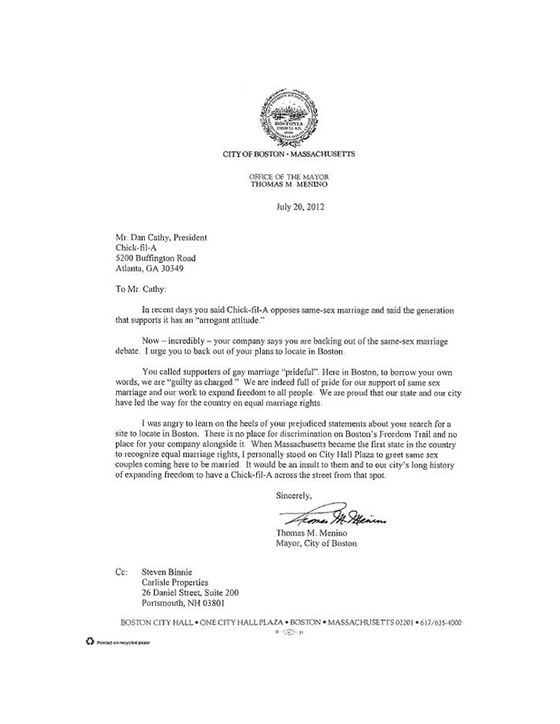
Niciun comentariu:
Trimiteți un comentariu